
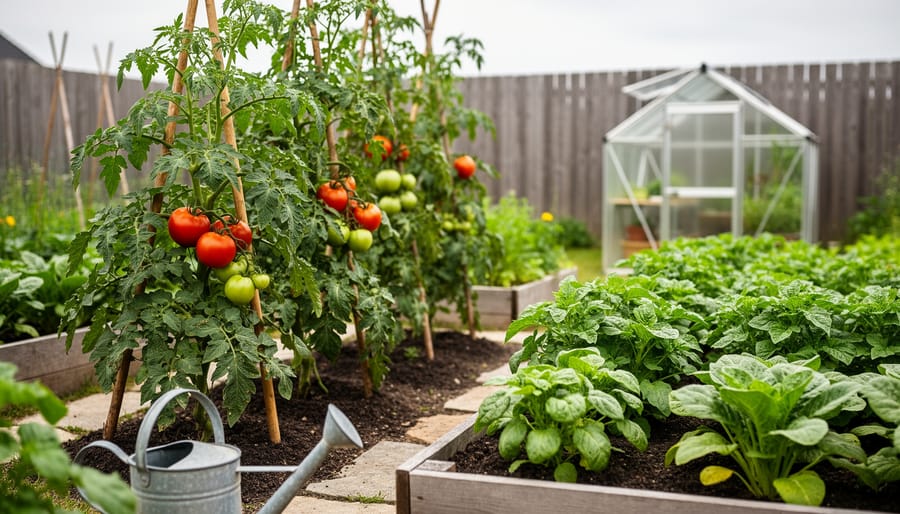
Why Smart Gardeners Are Using Peptides to Transform Their Plants (And How to Source Them Safely)
I’ll be honest: when I first heard gardeners talking about research peptides, I thought someone had wandered into the wrong conference room. But after a conversation last spring with a molecular biologist who also happens to grow the most incredible tomatoes in her Edmonton backyard, I realized there’s more to this story than the sketchy supplement ads flooding your inbox. Research peptides are short chains of amino acids used primarily in laboratory settings to study plant growth, stress responses, and disease resistance. Some companies now market these compounds directly to curious growers, and if you check their website you’ll find peptide catalogs that look more like chemistry textbooks than garden catalogs.
Here’s what you actually need to know. These aren’t magic fertilizers, and they’re definitely not replacements for good soil, proper watering, or the basics of starting seeds indoors. Research peptides are exactly what the name suggests: materials intended for experimental research, not consumer products with proven track records in your vegetable patch. The companies selling them make no agricultural claims because these peptides haven’t been tested or approved for use in food crops.
Yet the intrigue is understandable. In Zone 3, where we’re constantly battling short growing seasons, late frosts, and stubborn soil, anything promising better resilience catches our attention. I’ve watched our gardening community try everything from mycorrhizal inoculants to biochar, always searching for that extra edge. But peptides occupy a different category entirely, one that sits uncomfortably between legitimate scientific research and uncharted territory for home growers.
This isn’t a dismissal. It’s an invitation to understand what you’re actually looking at before spending money or risking your garden.
What Are Research Peptides and Why Are Gardeners Talking About Them?
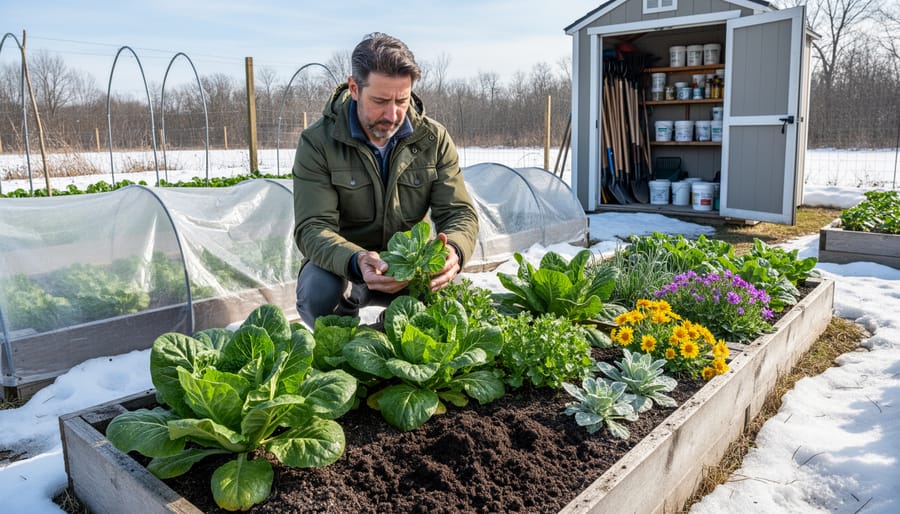
When I first heard fellow gardeners buzzing about peptides, I’ll admit I was skeptical. It sounded like something from a chemistry lab, not a garden bed. But here’s what I’ve learned: short chains of amino acids called peptides are actually natural compounds that exist throughout all living things, including plants. Think of them as molecular messengers that tell cells what to do, when to grow, how to respond to stress, when to flower.
In your garden right now, peptides are quietly directing traffic. They’re the molecules that help your tomatoes know when to set fruit, that signal your perennials to prepare for winter dormancy, that coordinate your plants’ response when they’re attacked by pests. Scientists have known this for decades, but what’s changed recently is our ability to study specific peptides in isolation and understand exactly what they do.
Agricultural researchers have been exploring whether applying specific peptides externally might enhance these natural processes, potentially boosting disease resistance, improving stress tolerance, or optimizing growth patterns. The idea is similar to how we already use products like kelp extract or compost tea, except peptides work at a much more targeted molecular level. For Zone 3 gardeners facing brutal winters and short seasons, anything that might help plants cope with stress naturally catches our attention.
The research community’s interest has trickled down to experimental gardeners who document their trials with the same care a scientist would. They’re not looking for magic solutions, but rather trying to understand whether these compounds might offer incremental improvements when everything else is already optimized.
The Science Behind Peptides in Plant Growth
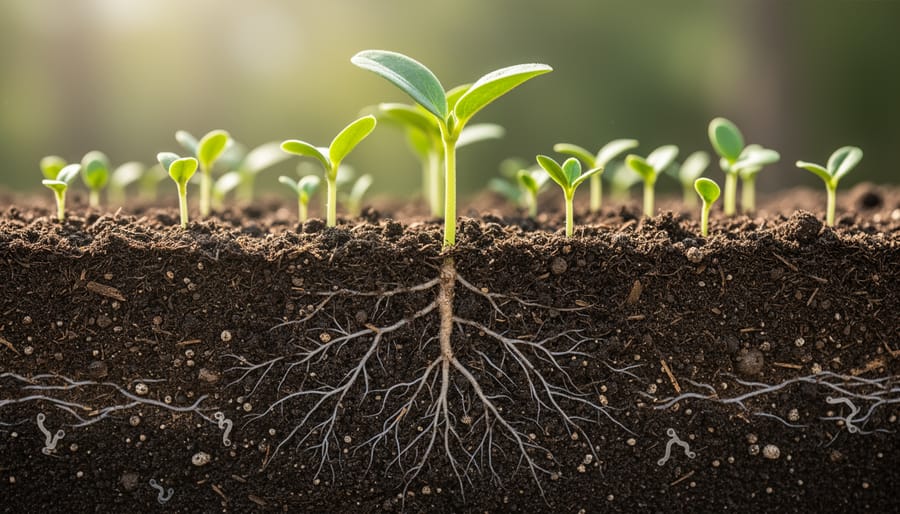
Peptides vs. Traditional Plant Hormones
If you’ve ever used rooting hormone on cuttings or applied gibberellic acid to encourage germination, you already know traditional plant hormones. These are the workhorses most gardeners turn to: auxins, cytokinins, gibberellins, ethylene, and abscisic acid. They’re well-studied, widely available, and they work by triggering broad physiological changes throughout the plant.
Peptides operate differently. While traditional hormones are like master switches that affect entire systems (think of auxin flooding a cutting to promote root development everywhere), peptides function more like targeted text messages between cells. They carry specific instructions to particular tissues, potentially offering more precision with less disruption to the plant’s overall balance.
Here’s a concrete example: gibberellic acid makes plants grow taller by promoting cell elongation across the board, which is great until your tomatoes bolt or your lettuce stretches. A peptide signal, by contrast, might theoretically enhance stress tolerance in root tissue without forcing aggressive top growth, though I’ll be honest, we’re still in early days understanding exactly how to harness this specificity in practice.
Traditional hormones also tend to persist longer in plant tissue, while peptides break down quickly, making them harder to apply effectively but potentially safer for the plant’s natural regulatory systems. For Zone 3 gardeners, that quick breakdown means you’d likely need repeated applications, adding cost and effort to any experiment.
What Zone 3 Gardeners Need to Know
Zone 3 gardeners know that every season can bring surprises. One spring in Alberta, I watched a late May frost nip my tomatoes and peppers, despite row covers and the usual precautions, the plants just had no time to bounce back. That experience sent me searching for anything that might tip the odds in our favor. The buzz around research peptides for sale first piqued my interest during a community gardeners’ workshop, where folks were swapping stories of failed starts and miracle recoveries. Could peptides really help?
Here’s what sets our climate apart: Alberta’s Zone 3 means wildly variable spring temperatures, early autumn frosts, and just a handful of months for crops to mature. Even cold-hardy classics like kale or peas sometimes stagger under sudden heat or chilly nights. Researchers studying peptides have been looking at their ability to signal stress-response pathways in plants, including those related to cold tolerance and water regulation. For instance, some experimental peptides appear to prime plants’ natural protective mechanisms, much like how anti-desiccant sprays work for overwintering evergreens.
But translating lab results to the backyard isn’t straightforward. Most of the peptide products being marketed to gardeners are still unproven outside controlled settings. Experienced Zone 3 growers have learned to be skeptical of anything promising instant resilience. Still, a few brave local experimenters have started side-by-side trials and swapped notes on whether foliar peptide sprays help seedlings withstand those unpredictable early cold snaps. For those curious enough to try, starting with a tiny batch and keeping notes, like comparing treated versus untreated plots, can turn each frost into a learning opportunity, not just a setback.
Where Gardeners Are Finding Research Peptides for Sale
Red Flags When Shopping for Research Compounds
I learned this the hard way when I first got curious about experimental compounds for my greenhouse. I nearly ordered from a supplier with a slick website and rock-bottom prices, until a fellow gardener in our Alberta group asked me one simple question: “Can they show you third-party purity testing?”
They couldn’t. That was my first red flag.
Reputable suppliers provide certificates of analysis from independent labs, not just in-house claims. If you’re looking at research peptides for sale and can’t find clear documentation of purity percentages, batch numbers, and testing methods, walk away. Legitimate companies make this information easy to access because they know serious researchers demand it.
Watch for vague product descriptions that don’t specify exact peptide sequences or concentrations. If a listing just says “plant growth peptide” without molecular details, you’re gambling with your money and potentially your plants. I’ve seen gardeners waste entire seasons on compounds that turned out to be heavily diluted or contaminated.
Missing contact information is another warning sign. Reliable suppliers have verifiable business addresses, responsive customer service, and clear policies. Anonymous vendors operating through bare-bones websites with only a payment portal? That’s not where you want to source anything you’re applying to plants you’ve nurtured for months.
Price can signal problems too, if it seems impossibly cheap compared to established suppliers, there’s usually a reason. Quality research compounds require proper synthesis and storage. That costs money.
Should You Experiment With Peptides in Your Garden?
Last spring, I stood in my greenhouse holding a vial of research peptides in one hand and a packet of tried-and-true kelp extract in the other. The kelp had never let me down. The peptides? They represented curiosity, possibility, and a fair bit of uncertainty. If you’re wondering whether to take the plunge into peptide experimentation, you’re asking the right questions.
The honest answer is that it depends on what you’re hoping to achieve and what you’re willing to invest beyond money. Research peptides aren’t magic bullets, and in Zone 3 gardening, we’ve learned the hard way that shortcuts rarely deliver what they promise. But for gardeners who genuinely enjoy the experimental process, who find satisfaction in careful observation and documentation, peptides offer an intriguing frontier to explore.
Pros
- Potential to enhance stress tolerance and cold hardiness in challenging climates.
- Opportunity to contribute to citizen science and community knowledge-building.
- May accelerate growth or improve yields in controlled, small-scale trials.
- Expands your understanding of plant biology and cutting-edge agricultural research.
Cons
- Research-grade peptides can be expensive, especially for testing multiple compounds.
- Results are highly experimental with limited long-term data for home garden applications.
- Requires significant time investment in documentation, control groups, and repeated trials.
- No guarantees of measurable improvement over proven organic methods.
- Learning curve for proper dilution, application timing, and safety protocols.
Consider your gardening personality honestly. Are you the type who meticulously tracks germination dates and soil temperatures, or do you prefer intuitive, low-maintenance approaches? Peptide experimentation rewards the former. You’ll need to run side-by-side comparisons, measure results objectively, and resist the urge to attribute every success to your new peptide regimen when it might simply be better weather or improved soil.
The financial reality matters too. A single research-grade peptide might cost what you’d normally spend on seeds for an entire season. For many Zone 3 gardeners working within tight budgets, that money could buy cold frames, quality compost, or hardy perennial varieties with proven track records.
My advice? Don’t experiment with peptides because you think your garden needs saving. Experiment because you’re genuinely curious, you have the resources to do it properly, and you’re prepared for the possibility that your control plants might outperform your peptide-treated ones. That’s not failure, that’s valuable data.
Starting Small: A Practical Approach to Peptide Experimentation
Keeping a Garden Research Journal
I learned the value of keeping notes the hard way. Three years ago, I tried a new soil amendment in half my tomato beds and forgot which half. By harvest time, I had no idea what worked and what didn’t. That frustrating season taught me that good recordkeeping turns random trials into actual learning.
You don’t need a fancy system. I keep a spiral notebook in my potting shed and spend maybe five minutes after each garden session jotting down what I did. For any experiment, whether it’s peptides or a new fertilizer blend, I note the application date, which plants got the treatment, dosage or dilution rate, and weather conditions. Every week or two, I add quick observations about growth, color, or anything unusual.
The real magic happens when you can flip back through months of entries and spot patterns. Maybe your treated plants showed faster spring green-up but wilted quicker during that July heat wave. Those details matter, but they’re impossible to recall accurately without notes.
Start simple. Use your phone’s camera to take dated photos of test plants and controls from the same angle each week. Visual records often reveal changes your eye misses day-to-day. Snap a picture of product labels too, so you remember exactly what you used.
The goal isn’t perfection. It’s having enough information next season to make smarter decisions than you did this year.

Safer Alternatives and Proven Methods for Zone 3 Success
Before getting caught up in the excitement of experimental peptides, let’s talk about the techniques that have proven themselves season after season in Zone 3 gardens. These methods might not sound as cutting-edge, but they deliver results you can count on.
Building healthy soil is still the single most impactful thing you can do for your plants. When you prepare soil properly with compost, well-rotted manure, and organic matter, you create an environment where plants naturally produce their own growth-regulating compounds. I’ve watched struggling gardens transform completely after two seasons of dedicated soil improvement, no experimental treatments needed.
Cold-hardy variety selection matters enormously in our climate. Choosing vegetables and flowers bred specifically for short seasons and temperature swings means you’re working with plants that already have the genetic tools to thrive here. That built-in resilience is hard to replicate with any external treatment.
Season extension techniques like winter sowing row covers, cold frames, and hoop houses physically protect plants while extending your growing window by weeks. These methods have decades of proven success behind them and require no ongoing purchases or complicated protocols.
Companion planting and crop rotation help manage pests and diseases naturally while improving soil health. These time-tested practices cost nothing but planning and attention.
For gardeners just starting a vegetable garden these proven methods provide the essential foundation. Even experienced gardeners exploring new techniques benefit from ensuring these basics are solid first. Think of it this way: experimental approaches like peptides might offer incremental improvements, but they cannot compensate for poor soil, wrong varieties, or inadequate season protection. Get the fundamentals right, then experiment from a position of strength.
The world of research peptides offers a fascinating glimpse into the future of gardening, and I’ll admit, the science is compelling. When I first heard about gardeners experimenting with these compounds, I was skeptical. But after digging into the research and talking with other Zone 3 growers who’ve tested peptides in controlled experiments, I’ve come to appreciate both the potential and the limitations.
Here’s what I’ve learned: research peptides might open new doors, but they won’t replace the fundamentals that make Zone 3 gardens thrive. The cold-hardy varieties we’ve spent years selecting, the compost we’ve built season after season, the season extension techniques we’ve perfected, these remain the backbone of success in our challenging climate. Peptides are an experiment, not a shortcut.
If you decide to explore this frontier, approach it as a learning journey. Start small, document everything, and share your findings with fellow gardeners. The Alberta gardening community has always been built on curiosity and generosity, we test new ideas, we fail sometimes, and we share what works. That spirit of experimentation is what keeps our gardens evolving, even when spring arrives six weeks late.
Whether you’re intrigued by cutting-edge peptide research or committed to time-tested organic methods, remember this: the best gardening happens when we stay curious, remain patient with the process, and keep talking to each other. Your next breakthrough might come from a research compound ordered online, or it might come from a conversation with your neighbour over the fence. Both paths are worth exploring in Zone 3.