
Winter Sowing in Zone 4: Your Secret Weapon for Early Spring Blooms
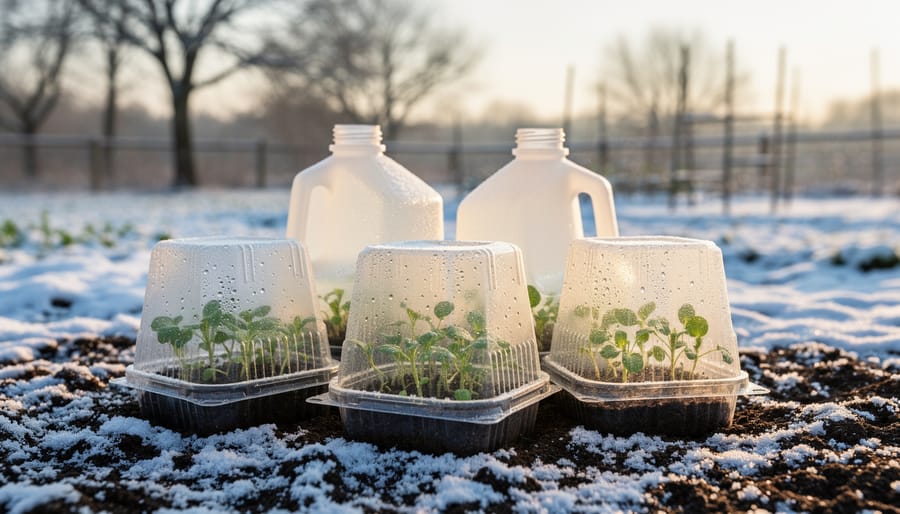
Start winter sowing in Zone 4 between late December and early February, when your containers can freeze and thaw naturally outdoors. This method bridges the gap between starting seeds indoors under lights and direct spring sowing, giving you earlier blooms and stronger seedlings without monopolizing your kitchen counters.
Fill recycled milk jugs or clear containers with moistened seed-starting mix, sow cold-hardy perennials and hardy annuals directly on the surface or at their recommended depth, then seal the containers and set them outside in a protected spot where they’ll receive sunlight and natural weather cycles. The containers act as mini-greenhouses, protecting seeds from harsh winds while allowing them to experience the freeze-thaw cycles they need for germination.
Zone 4 gardeners have a sweet spot for this technique. Your winters provide enough cold stratification for stubborn perennials like echinacea and rudbeckia, while your springs warm gradually enough that seedlings won’t cook inside their containers before you can transplant them. I learned this the hard way my first year, starting too early in December with lettuce that sprouted during a January thaw and promptly froze solid.
The magic happens when March arrives and temperatures start climbing. Your winter-sown seedlings will germinate on their own schedule, developing robust root systems while you’re still planning your garden layout. By the time you’d normally be starting seeds indoors, you’ll have hardened-off transplants ready to go into the ground.
What Makes Zone 4 Perfect for Winter Sowing
If you’ve been practicing Zone 3 gardening and recently discovered you’re actually in Zone 4, congratulations! You’ve just unlocked a few extra advantages for winter sowing success. Zone 4 occupies a sweet spot that makes this technique particularly effective, and understanding why can help you make the most of your growing season.
Zone 4’s defining characteristic is those winter low temperatures ranging from -30°F to -20°F (-34°C to -29°C). While that still sounds brutally cold, it’s just enough of a difference from Zone 3 to create noticeably better conditions for winter sowing. The key lies in what happens during late winter and early spring. Zone 4 areas typically experience more consistent freeze-thaw cycles, which is exactly what seeds in winter sowing containers need to break dormancy naturally.
I’ve noticed fascinating differences even within Zone 4 itself. Here in Alberta, our Zone 4 regions tend to have drier winters compared to Zone 4 areas in Ontario or the northeastern United States. This actually works in our favor for winter sowing because there’s less risk of containers becoming waterlogged during mild spells. The snow acts as insulation without creating soggy conditions that might rot seeds.
The temperature fluctuations in Zone 4 are also more gradual than in milder zones. Your containers won’t experience the dramatic swings that can stress seedlings. Instead, they get that slow, steady transition that mimics natural conditions perfectly. Seeds germinate when they’re truly ready, hardening off naturally as they grow.
Another advantage? Zone 4 gives you a slightly longer window for winter sowing compared to Zone 3. You can start as early as January in some years, and your containers will still experience adequate cold stratification before spring arrives. This means more opportunities to experiment with different sowing dates and discover what works best for your specific microclimate and the plants you’re growing.
The Best Time to Start Winter Sowing in Zone 4
Reading the Signs in Your Garden
Your garden tells stories if you know how to listen, and this is especially true when planning winter sowing in Zone 4. I’ve learned over the years that nature provides reliable clues about timing, often more accurate than calendar dates alone.
Start by watching your snow cover. Those containers need consistent snowmelt cycles to trigger germination, so observe when your snow begins melting during daytime highs and refreezing at night. This freeze-thaw pattern is your friend. In my Alberta garden, I look for that late-January or early-February window when we’re getting above-freezing days but still dipping below zero at night.
Pay attention to your neighbors’ gardens too. When do the earliest perennials start poking through? When does the ground become workable? These observations help you estimate backward to ideal sowing times. Community gardening groups often share these local observations, creating a collective wisdom that’s invaluable for timing.
Another reliable indicator is tracking daylight length. Once we’re gaining several minutes daily, usually mid-February onward, seeds in those winter sowing containers respond to both temperature swings and increasing light. Combining this awareness with your area’s last frost dates helps you work backward to determine when your seedlings will be properly hardened off and ready for transplanting.
When Zone 4 Differs from Zone 3
If you’re reading this from Zone 4, you’ve got a bit of breathing room compared to your Zone 3 neighbors. I learned this firsthand when I moved from a Zone 3 farmstead to a Zone 4 property just 40 miles south. The difference might seem small on paper, but it translates into real advantages for winter sowing.
In Zone 4, you can generally start your winter sowing containers about two weeks earlier than Zone 3 gardeners. Where Zone 3 folks might wait until late January or early February, Zone 4 gardeners can confidently start in early to mid-January. This earlier start gives your seeds more freeze-thaw cycles before spring arrives, which many cold-hardy varieties absolutely love.
The frost-free date in Zone 4 typically arrives 7-10 days sooner too, usually landing around mid-May rather than late May. This means your winter-sown seedlings have a longer transition period to harden off naturally outdoors. I’ve noticed my Zone 4 seedlings tend to be stockier and more robust by transplant time.
Your sowing window extends further into March as well. While Zone 3 gardeners need to wrap up most winter sowing by mid-February to ensure adequate cold exposure, Zone 4 allows you to push certain varieties into early March without sacrificing germination success.
Plants That Thrive with Zone 4 Winter Sowing
Foolproof Flowers for First-Timers
Let me share something that changed my winter sowing game completely: starting with flowers that practically guarantee success. When I first tried winter sowing in my Zone 3 garden, I planted everything under the sun and quickly learned that some flowers are far more forgiving than others.
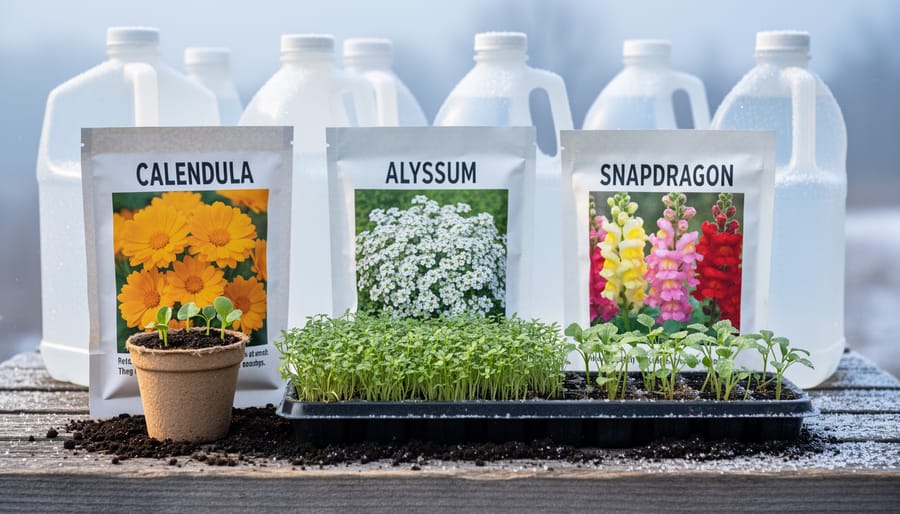
Sweet alyssum became my confidence-builder. This low-growing annual germinates enthusiastically in those milk jug containers, even when temperatures swing wildly. I’ve sown it as early as January, and by late spring, I had clouds of tiny white and purple blooms ready to edge every bed in my garden. The best part? Alyssum doesn’t mind a little neglect, which is perfect when you’re still figuring out the watering balance.
Calendula is another champion for Zone 4 beginners. These cheerful orange and yellow flowers are tougher than they look, handling frost like seasoned veterans. I’ve watched them germinate in containers still dusted with snow, pushing through with determination that rivals any weed.
Snapdragons surprised me most. Despite their delicate appearance, these cottage garden favorites are cold-hardy annuals that thrive with winter sowing. They need light to germinate, so I barely press the seeds into the soil surface. By mid-spring, sturdy seedlings are ready to transplant, blooming weeks earlier than greenhouse-started plants.
Vegetables Worth the Wait
The beauty of winter sowing in Zone 4 lies in growing vegetables that actually thrive in cooler conditions. I’ll never forget the spring I harvested crisp lettuce weeks before my neighbor’s greenhouse seedlings were even hardened off. That’s the magic of cold-hardy crops meeting winter sowing.
Start with leafy greens like spinach, arugula, and various lettuce varieties. These champions can handle frost and actually taste sweeter when they mature in cool weather. Kale is another superstar, practically laughing at those late spring snowflursts we know so well. I winter sow mine in February, and by May, I’m already picking baby leaves for salads.
The brassica family deserves special mention here. Broccoli, cauliflower, and cabbage all respond beautifully to winter sowing, developing strong root systems while temperatures remain cool. Swiss chard and Asian greens like bok choy are equally reliable performers.
One gardener in our community swears by winter-sown peas, claiming they outperform direct-sown seeds every time. The secret is letting nature handle the cold stratification naturally, so when spring arrives, these vegetables are already established and ready to grow vigorously in those precious cool weeks before summer heat arrives.
Ambitious Options for Experienced Gardeners
Ready to push your winter sowing skills further? Zone 4 gardeners can absolutely tackle some of the more challenging beauties that require extra patience and attention to detail.
Native perennials are where I’ve found the most rewarding successes. Plants like Prairie Smoke, Wild Lupine, and Purple Coneflower thrive in our climate once established, but they need that crucial cold stratification period that winter sowing naturally provides. I remember my first attempt with Butterfly Weed—I waited almost three months before seeing those first tiny leaves emerge, but wow, was it worth the wait when those brilliant orange blooms appeared the following summer.
Columbine varieties, both native and ornamental types, respond beautifully to winter sowing in Zone 4. The extended cold period breaks their dormancy perfectly. I’ve also had wonderful results with Delphinium and Baptisia, though these definitely test your patience as they can take weeks longer than annuals to germinate.
Here’s my best advice from years of trial and error: label everything meticulously, and don’t give up on containers too early. Some of these ambitious choices won’t show signs of life until late spring when temperatures consistently warm up. Keep checking those milk jugs even when you think nothing’s happening—nature works on its own timeline.
Your Step-by-Step Winter Sowing Setup
Container Prep That Actually Works in Zone 4
I learned this lesson the hard way after my first batch of containers cracked into pieces during a particularly brutal February thaw-freeze cycle. The secret to Zone 4 success? Think milk jugs, clear takeout containers, and any translucent plastic that can flex with our wild temperature swings.
Your best friends are gallon milk jugs with the tops cut off but hinged with duct tape, creating mini greenhouses that bend rather than shatter. I’ve also had great success with those clamshell containers from the grocery store bakery section. Just make sure they’re at least 3-4 inches deep to give roots room to develop.
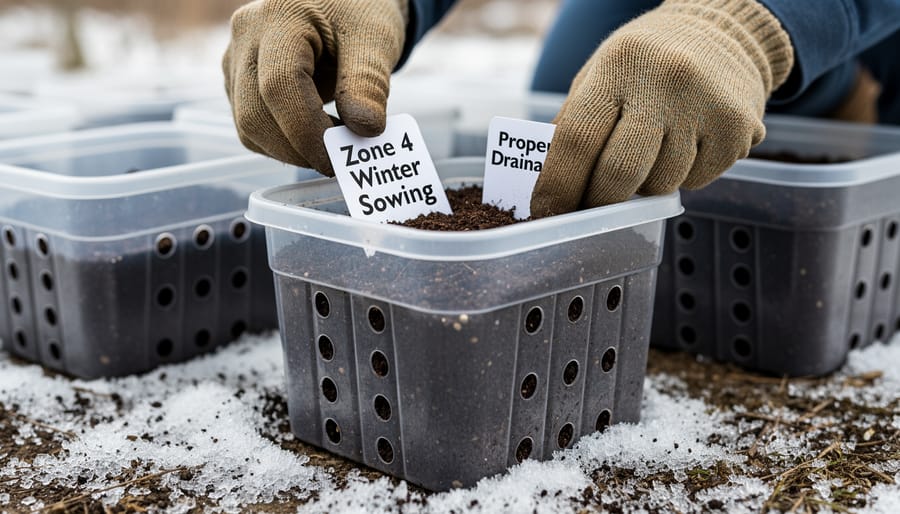
Here’s what actually matters: drainage holes are non-negotiable. Punch at least six holes in the bottom using a heated screwdriver or drill. I also add a few small ventilation holes near the top to prevent moisture buildup on warmer days.
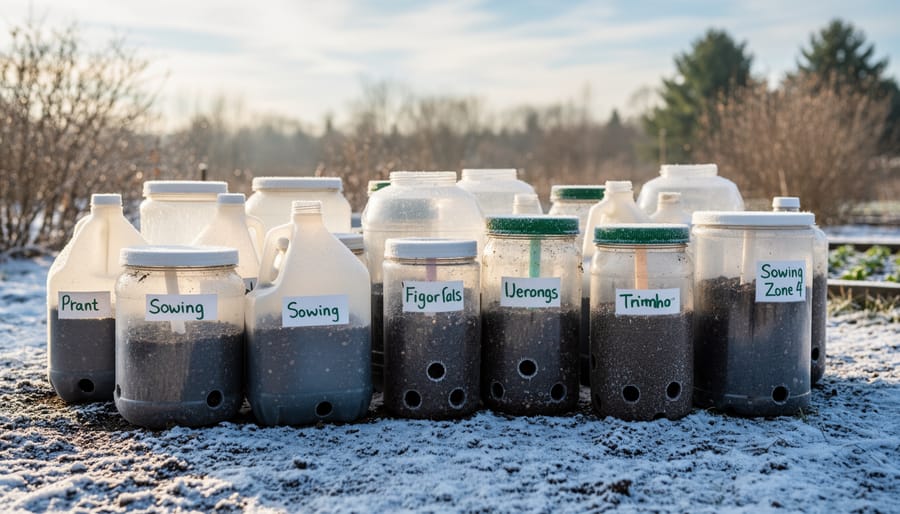
Before filling, give containers a quick wash with diluted bleach solution to prevent damping off disease. Then use a quality seed-starting mix, not garden soil, which gets too compacted when frozen. Moisten it thoroughly before sowing since you won’t be watering again until spring arrives. Label everything with permanent marker because trust me, you’ll forget what you planted within a week.
Where to Place Your Containers for Success
Location matters more than you might think when winter sowing in Zone 4. I learned this the hard way my first year when I tucked my containers against the north side of my garage, thinking they’d be protected. They barely got any sun, and germination was disappointingly slow.
Your containers need a spot that receives full southern exposure, ideally getting at least six hours of direct sunlight during those short winter days. The south side of your home or garage works beautifully, creating a little microclimate where containers benefit from both reflected warmth and radiant heat from the building.
While sunlight is crucial, wind protection is equally important. Those relentless Zone 4 winds can quickly dry out your containers and damage emerging seedlings. Position your containers where they’re shielded by structures, fences, or even snowbanks. One gardener in our community creates a windbreak using bales of straw arranged in a U-shape, which works wonderfully.
Avoid placing containers directly on frozen ground if possible. Setting them on pallets or bricks allows for better drainage and prevents them from freezing solid to the surface. This simple adjustment has saved many of my containers from cracking during those brutal temperature swings we experience between late winter and early spring.
Troubleshooting Common Zone 4 Winter Sowing Challenges
Let me tell you, I’ve made just about every winter sowing mistake possible, and I’ve got the stories to prove it. The good news? Most problems have surprisingly simple solutions once you know what to look for.
The soggy container syndrome is probably the most common issue I hear about in our Zone 4 community. You check your containers in March, and instead of healthy seedlings, you’ve got a swampy mess with fuzzy mold. I learned this the hard way my first winter when I got overzealous with drainage holes. Too few holes, and you’re basically creating a miniature bog. The fix? I now poke at least ten drainage holes in the bottom of each milk jug, plus a few extra around the lower sides. During those late winter thaws we get in Zone 4, where temperatures yo-yo like crazy, this extra drainage makes all the difference. If you catch mold early, prop your containers open slightly for a day or two to air them out.
Late spring freezes are another beast entirely. Just last year, I had gorgeous snapdragon seedlings that got hammered by a surprise April freeze. My neighbor, who’s been winter sowing for twenty years, taught me her trick: keep old bedsheets handy and drape them over containers when temperatures are predicted to drop below 25 degrees Fahrenheit. The fabric creates just enough insulation without blocking light. Some folks in our gardening group even bring their containers into an unheated garage for particularly brutal cold snaps.
Now, let’s talk about unwelcome visitors. Mice discovered my winter sowing setup one year and decided my bachelor’s button seeds were their personal buffet. I was devastated until someone suggested placing containers on elevated platforms or tables rather than directly on the ground. A simple wire rack solved my rodent problem completely. For those dealing with curious cats or ambitious squirrels, a piece of chicken wire loosely draped over your container area works wonders.
The trickiest challenge? Seeds that simply refuse to germinate. Sometimes our Zone 4 winters aren’t quite cold enough for certain species needing deep stratification. If you’re not seeing any action by late April, those seeds might need more time. Patience really is a virtue in winter sowing.
From Winter Sowing to Spring Transplanting
The weeks after winter sowing can feel like watching paint dry, but trust me, patience pays off beautifully. Your containers will sit quietly through February and into March, and you might wonder if anything’s actually happening in there. Here’s the thing I’ve learned through several seasons: the seeds know what they’re doing, even when we don’t see progress.
Around mid-March in Zone 4, you’ll start noticing tiny green specks pushing through the soil. That first glimpse always makes my heart skip a beat! Keep those lids on during cold snaps, but begin venting on warmer days when temperatures climb above freezing. The seedlings will grow slowly at first, which is exactly what you want. This gradual development creates sturdy, resilient plants.
By late March or early April, your containers will transform into miniature greenhouses bursting with growth. Once seedlings develop their first true leaves and daytime temperatures consistently stay above 40°F, it’s time to remove those lids completely. This is when things get exciting but also requires attention to weather forecasts. Cold nights below 32°F mean you’ll need to pop those lids back on temporarily.
The magic window for transplanting typically arrives between late April and mid-May in Zone 4, depending on what you’re growing. Lettuce and other cold-hardy greens can usually go out earlier, while tomatoes and peppers need to wait until frost danger passes. Before moving anything into the garden, though, hardening off seedlings becomes essential. Start by placing containers in a sheltered spot for a few hours daily, gradually increasing their outdoor exposure over seven to ten days.
I remember my first year rushing this process and watching my beautiful seedlings wilt dramatically. Now I know better. Zone 4 spring weather can be unpredictable, so take your time with this transition. Your winter-sown seedlings are already tough, but they still deserve a gentle introduction to their permanent home.
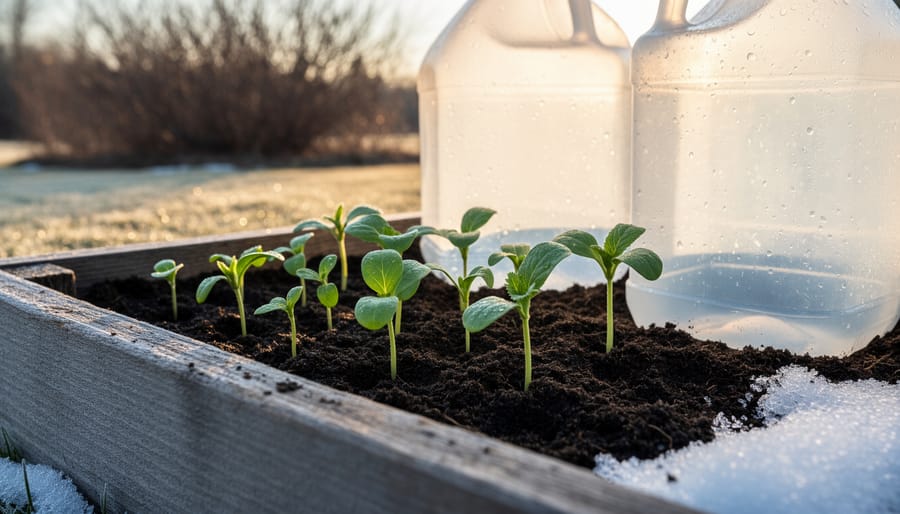
If you’re gardening in Zone 4, you’ve got a genuine advantage that’s worth celebrating. While your growing season might feel short compared to warmer regions, winter sowing gives you a head start that transforms those challenging conditions into an opportunity. Think of it as letting nature do the heavy lifting while you stay warm inside.
Those of us in Zones 3 and 4 share something special. We understand the thrill of seeing seedlings emerge through melting snow and the satisfaction of outsmarting our climate with techniques that actually work for our conditions. We’re part of a resilient community that doesn’t just adapt to cold winters but uses them strategically.
So here’s my challenge to you: start your first winter sowing project this season. Grab a few milk jugs, pick some reliable perennials or hardy annuals, and give it a try. You don’t need to be perfect. Some containers might fail, but others will surprise you with their vigor. And when those seedlings start popping up in spring, I’d love to hear about it. Share your successes, your questions, and even your failures with fellow Zone 4 gardeners. Together, we’re building a knowledge base that helps everyone grow better gardens in our unique climate.