
How Agrivoltaic Farming Can Transform Your Garden (Even in Zone 3)
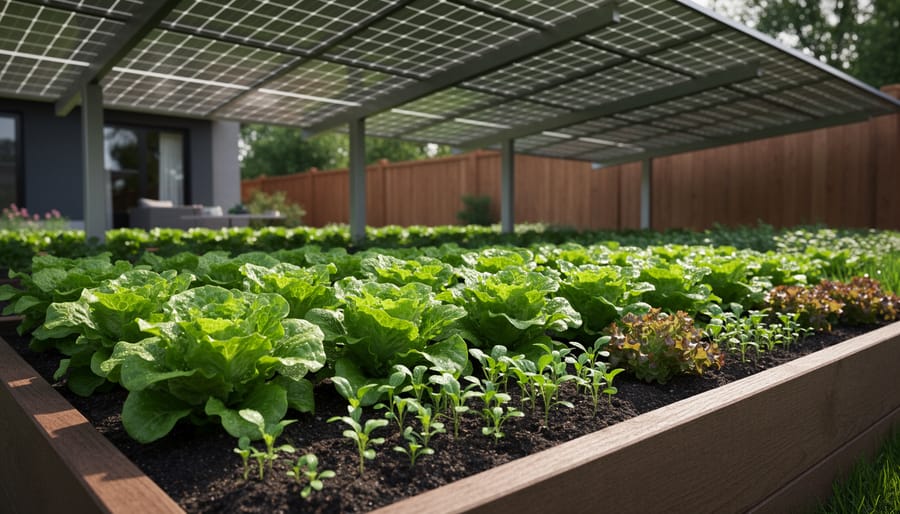
Agrivoltaic farming combines solar panels with crop production in the same space, letting you grow food in the partial shade beneath elevated photovoltaic arrays. For Zone 3 gardeners, this practice offers a clever solution to extreme temperature swings, late spring frosts, and the scorching afternoon sun that can stress tender plants during our short but intense growing season.
I first learned about agrivoltaics from a friend near Red Deer who installed a small solar setup over her lettuce beds. She was trying to reduce her electricity costs, but what surprised her most was how well her greens performed in that dappled light. The panels provided afternoon shade during those brutal July heat spells, kept soil moisture more consistent, and even protected against late-May frosts that usually devastated her early plantings.
The concept itself isn’t new. Farmers in water-scarce regions have been experimenting with this dual-use approach since the 1980s, but it’s gaining fresh attention as more gardeners look for ways to extend their season and tackle climate challenges without massive infrastructure investments. Research shows that certain crops actually thrive with 30 to 50 percent shade, producing better yields while the panels above generate clean energy.
For those of us dealing with Zone 3 conditions, agrivoltaics addresses several persistent headaches at once. The shade reduces water evaporation during dry spells. The panels act as a physical barrier against hail and wind. And perhaps most valuably, they moderate temperature extremes that make early and late-season growing such a gamble in Alberta.
Whether you’re curious about scaling up with ground-mounted arrays or simply want to experiment with a small raised bed setup, understanding how plants and panels work together opens up practical possibilities for your garden.
What Is Agrivoltaic Farming, Anyway?
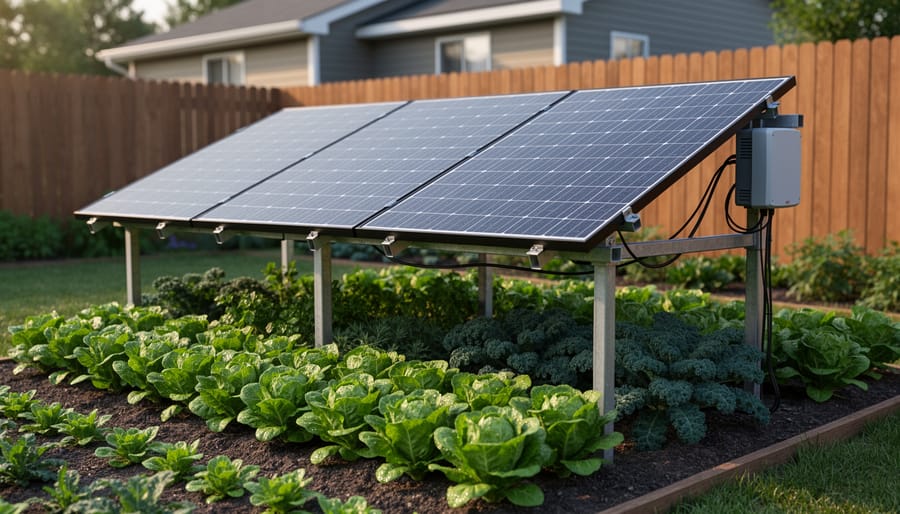
Agrivoltaic farming is exactly what it sounds like when you break down the word: agriculture plus photovoltaics, or in plain language, growing food underneath or right next to solar panels. Instead of choosing between energy production and crop production on the same piece of ground, you do both at once.
The concept started showing up in commercial agriculture about a decade ago, mostly in Europe and Japan where land is precious and farmers were looking for creative ways to diversify income. Picture massive solar arrays mounted high enough that tractors could pass underneath, with crops like lettuce, berries, or herbs growing in the altered light conditions below. The idea caught on because it worked, farmers could sell power back to the grid while still harvesting food from the same acres.
What’s changed recently is that this isn’t just for big agricultural operations anymore. Home gardeners are adapting the principles on a much smaller scale, and it turns out the benefits translate beautifully to backyard settings. You might mount a few solar panels over a raised bed, position them at the edge of your vegetable patch, or integrate them into an existing garden structure like a pergola or trellis system.
The ‘why’ behind agrivoltaics comes down to making every bit of your garden work harder. In Zone 3, where we’re fighting short growing seasons and unpredictable weather, dual-use space becomes even more valuable. Those panels aren’t just generating electricity, they’re creating shade when you need it, blocking wind, catching snow that melts into your beds, and extending your growing season by moderating temperature swings. You’re essentially building infrastructure that serves multiple purposes rather than dedicating space to just one thing.
Why Zone 3 Gardeners Should Care About This
If you’re gardening in Zone 3, you already know the drill. One week you’re basking in surprise heat that threatens to fry your transplants, and the next you’re scrambling to cover everything because a June frost decided to show up uninvited. I’ve spent enough seasons rushing outside with bed sheets at 10 PM to know that predictable growing conditions are more fantasy than reality here.
This is exactly why agrivoltaic setups deserve your attention.
Those solar panels aren’t just generating electricity, they’re creating microclimates that can smooth out some of our harshest weather extremes. The panels act as a physical barrier against wind, which matters more than most people realize. In Alberta, we’ve all watched plants get battered and dehydrated by relentless gusts, especially in exposed garden beds. A properly positioned panel structure breaks that wind, giving your plants a fighting chance to establish strong root systems instead of spending all their energy just staying upright.
The frost protection angle hits different for Zone 3 gardeners. During those treacherous shoulder seasons, late May and early September, when temperatures can plummet overnight, the panels hold a bit of the day’s warmth and radiate it back toward the ground. It’s not foolproof protection, but I’ve heard from gardeners in the Red Deer area who’ve gained an extra week or two on both ends of their season simply because the panels buffered those borderline freeze nights.
Here’s the twist nobody sees coming: shade is becoming an asset. Our summers are getting hotter, and full-sun crops that used to thrive are now struggling with heat stress and reduced soil evaporation issues during drought stretches. Lettuce bolts before you can blink. Peas give up by July. The dappled shade under solar panels keeps soil temperatures more moderate and moisture levels more consistent, which means crops that would normally flame out in peak summer can keep producing.
One Edmonton gardener I know installed a small panel array primarily for energy savings, then noticed her spinach bed underneath stayed productive through August, something that had never happened in her regular garden beds. That’s the kind of accidental benefit that makes you rethink your whole setup.
The Science Behind Growing Under Solar Panels
How Much Shade Are We Talking About?
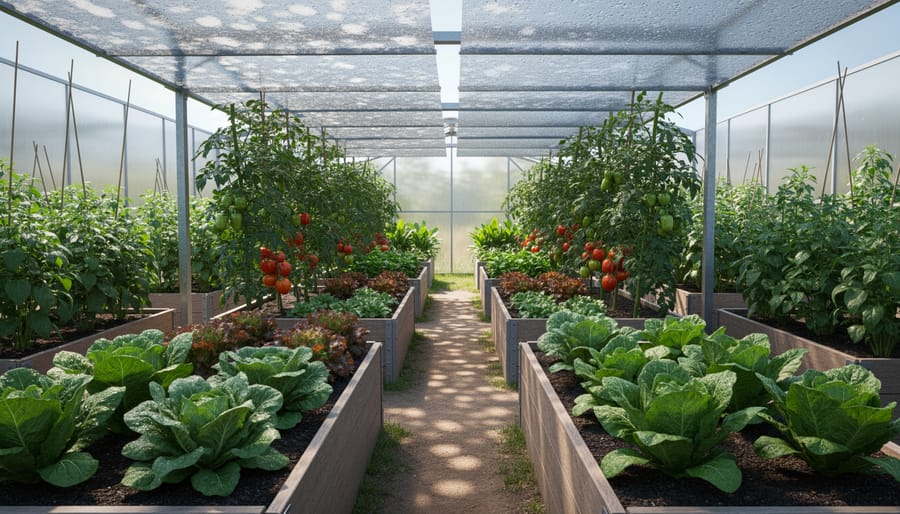
Solar panels typically create anywhere from 30% to 70% shade depending on their spacing and angle. That might sound like a lot, but here’s what it really means for your garden.
Most panels used in home agrivoltaic setups block about 40-50% of direct sunlight. This puts your growing area firmly in the “partial shade” category, think of it like growing under a tree canopy, but more predictable. Leafy greens like lettuce, spinach, and kale absolutely thrive in this range. They get enough light to grow vigorously without the stress that causes them to bolt in full sun.
Root vegetables like carrots and beets can handle 40-60% shade, though they’ll grow a bit more slowly. You’ll notice this mostly in cooler soil temperatures and slightly longer harvest windows.
Fruiting plants like tomatoes and peppers need closer to the 30% shade range to produce well. If your panels block more than half the light, you’ll get plenty of foliage but fewer fruits.
The beauty is that you can adjust panel height and spacing to dial in the shade level your chosen crops need. Start by observing where dappled light hits your garden beds throughout the day.
Water Retention and Soil Benefits
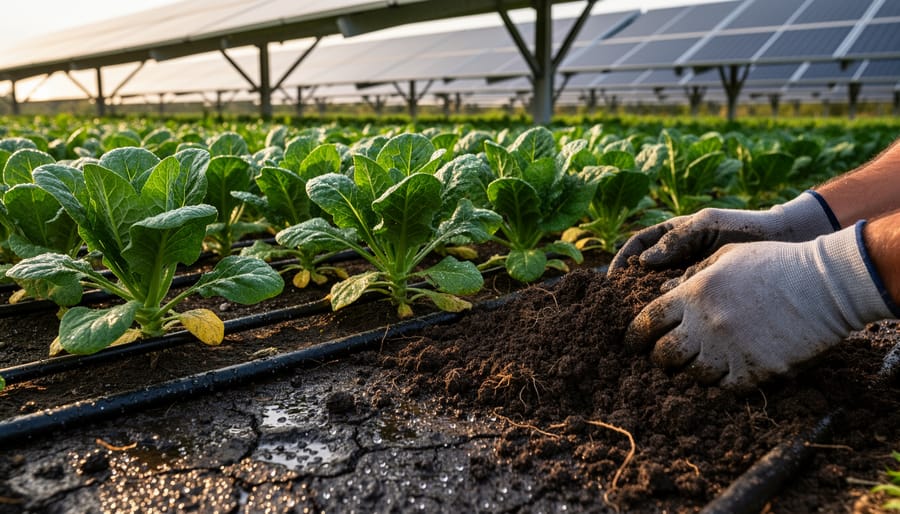
The canopy created by solar panels acts like a natural mulch layer, dramatically slowing water evaporation from the soil surface. In Zone 3’s hot summer days, which can surprise us with stretches of 30°C weather, that shade cuts evaporation rates by up to 30%. Your soil stays moist longer between waterings, which means less frantic evening watering sessions and healthier root systems.
I’ve noticed plants under panels need watering maybe twice a week instead of daily during July heat waves. The cooler soil temperature also encourages beneficial microorganisms to thrive, improving overall soil structure and nutrient availability.
Here’s a bonus most gardeners don’t initially consider: panels concentrate rainwater along their edges. Position rain barrels or strategically placed containers at panel corners, and you’ve created a passive rainwater collection system. During Alberta’s increasingly common dry spells, that captured water becomes liquid gold for garden beds that sit beyond the panel coverage.
The consistent moisture levels prevent the soil’s wet-dry cycling that stresses plants and leaches nutrients. Your garden becomes more forgiving of missed watering days, and you’ll spot fewer wilted plants during weekend getaways.
Setting Up Agrivoltaics in Your Home Garden
Budget-Friendly Options for Getting Started
You don’t need a $10,000 installation to test whether agrivoltaic farming works in your garden. I started with a single 100-watt portable solar panel propped on cinder blocks over a row of lettuce. Cost me less than $150, and I could move it around to find the sweet spot.
Portable camping solar panels are your best entry point. Set them at an angle over shade-tolerant crops like spinach or kale, secure them with stakes or weights, and you’re in business. Many come with adjustable legs that let you experiment with height and spacing without committing to anything permanent.
For a DIY approach, consider building a simple wooden frame from 2x4s and mounting small panels (even broken or discounted ones work fine). You can find off-spec solar panels on auction sites or through local installers who often have damaged units that still generate power. One Alberta gardener I know built a four-panel structure over his raised beds for under $400 using salvaged panels and pressure-treated lumber.
If you already have solar-powered garden lights or chargers, try clustering them over a small bed section to create partial shade while still getting their original function. It’s not true agrivoltaics, but it helps you understand how your plants respond to overhead structures.
The key is treating your first setup as an experiment, not an investment. Learn what your plants need, then scale up if it makes sense for your garden and budget.
Best Plants for Your Agrivoltaic Garden
When I first experimented with growing under my small solar array, I expected everything to struggle. Instead, I discovered a whole category of plants that actually seemed happier with the filtered light. The key is matching your plant choices to the light conditions you’re creating.
Leafy greens are your best friends in an agrivoltaic setup. Lettuce, spinach, kale, and Swiss chard all tolerate partial shade beautifully and actually benefit from protection during our brief but intense Zone 3 summers. I’ve had lettuce stay productive well into July under panels when my full-sun plantings bolted weeks earlier. Arugula is another winner, it stays milder and less bitter with reduced direct sunlight.
| Plant Type | Shade Tolerance | Zone 3 Performance | Growing Notes |
|---|---|---|---|
| Leafy Greens (lettuce, spinach, kale) | High | Excellent | Extended harvest, reduced bolting, consistent moisture |
| Root Crops (beets, carrots, radishes) | Moderate | Good | Slower growth but sweeter flavor, need consistent spacing |
| Herbs (parsley, cilantro, chives) | High | Excellent | Cilantro won’t bolt as quickly, mint thrives |
| Brassicas (broccoli, cauliflower) | Moderate | Good | Longer maturity time but protected from heat stress |
| Peas and Beans | Moderate | Variable | Bush varieties better than pole, may need supplemental support |
Root vegetables like beets, carrots, and radishes adapt surprisingly well to partial shade, though they’ll take longer to size up. A gardener in Calgary shared that her beets under panels were smaller but noticeably sweeter than her full-sun crop. Radishes work great as a quick succession crop between slower-growing plants.
For herbs, you’re in luck. Parsley, cilantro, chives, and mint all handle reduced light conditions beautifully. Cilantro is a particular standout because it stays productive much longer without bolting to seed, which is usually a struggle in our climate once the heat hits.
Brassicas like broccoli and cauliflower can work, though they’ll mature more slowly. The trade-off is protection from heat stress during our increasingly common hot snaps. One community member reported that her cauliflower under panels developed tighter, more compact heads than her exposed plantings.
Where agrivoltaic setups struggle is with heat-loving fruiting crops. Tomatoes, peppers, and squash need more direct sun than panels typically provide, so save your sunniest spots for these. Peas can work in spring if positioned to catch morning light, but they’re hit-or-miss.
Start with the easy wins, greens and herbs, then experiment from there. Every garden’s light pattern is unique, so what works under my east-facing panels might differ from your south-facing setup.
Common Challenges (And How to Solve Them)
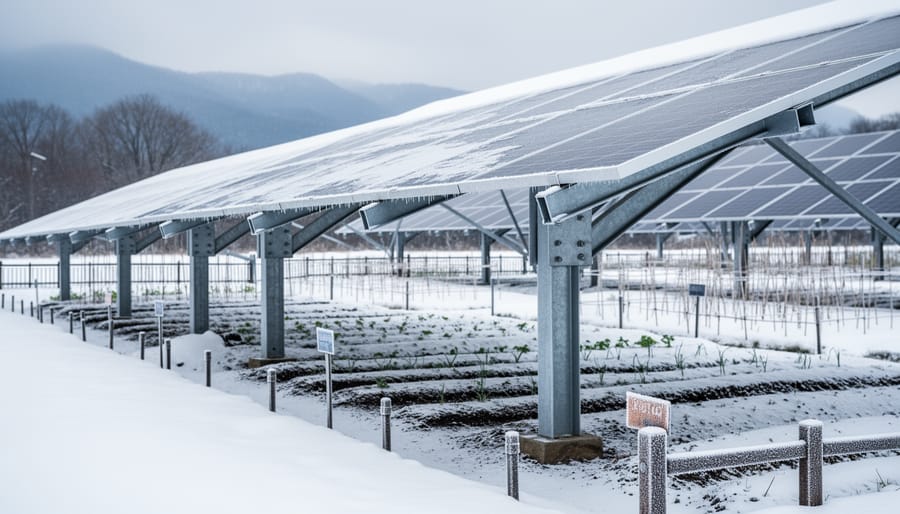
I’ll be honest, my first year experimenting with panels over my beds taught me more through mistakes than successes. The reality is that agrivoltaic setups come with a learning curve, but every challenge I’ve encountered has a workable solution.
Uneven growth patterns are probably the most common issue you’ll notice. Plants directly under the panel centers grow differently than those near the edges where more light penetrates. I solved this by rotating my crops throughout the season and choosing plant varieties specifically for their shade tolerance in the deepest coverage areas. If you’re seeing stretching or pale leaves, those plants need to shift toward the panel edges or swap with shade-lovers.
The upfront cost catches many gardeners off guard. A proper ground-mounted solar system isn’t cheap, even for a small garden setup. Start with one or two panels positioned over your most vulnerable beds, the ones that struggle with scorching heat or need frost protection. You can expand gradually as you learn what works. I’ve seen clever gardeners repurpose old panels or build simple wooden frames that hold panels at the right angle without the expense of commercial mounting systems.
Accessing plants for maintenance and harvest requires some planning. Panels mounted too low make weeding and picking impossible. I keep mine at least four feet above soil level, which gives me enough room to work comfortably underneath. Hinged or removable panels work brilliantly for beds you need frequent access to.
Snow load was my biggest Zone 3 concern before winter hit. Heavy, wet spring snow can stress poorly-secured panels. Make sure your support structure accounts for our substantial snow accumulation, I reinforce mine each fall and angle panels steeply enough that snow slides off rather than building up. I’ve learned to brush off heavy accumulations before they freeze solid.
Finding the right spacing takes experimentation. I started with panels covering about sixty percent of my bed area, which proved too much for my tomatoes but perfect for lettuce and spinach. Track how your specific plants respond and adjust accordingly. There’s no universal formula, your garden will tell you what it needs.
Real Stories from the Garden Community
When Sarah from Red Deer first mentioned her “solar panel garden” at our community meetup last fall, I’ll admit I was skeptical. She’d mounted three small panels on an adjustable frame over her raised beds, mainly to power her garden lights. But something unexpected happened: her lettuce stayed productive three weeks longer than usual, protected from both scorching July sun and early September frost.
“I wasn’t even trying to do agrivoltaics,” she laughed. “I just needed power for my lighting system. But when I noticed how much better my greens performed underneath, I started experimenting on purpose.”
Tom, a retired engineer in Camrose, took a different approach. He incorporated solar panels into his greenhouse design, creating what he calls a “hybrid space” where panels provide afternoon shade while generating enough electricity to run a small heater during cold snaps. His peppers, normally temperamental in our climate, produced steadily through August despite the heat waves we’ve been experiencing.
The most inspiring story comes from a community garden in Edmonton’s northeast. They installed a row of elevated solar panels specifically to create growing space underneath. The panels power their irrigation system while protecting shade-loving crops. The coordinator told me their Swiss chard and kale yields increased by nearly 40% compared to their fully exposed beds.
Not every experiment succeeded, of course. Linda in Sherwood Park learned the hard way that her panel placement was too low, making maintenance a nightmare. “I’d do it all over again, but I’d add another foot of clearance,” she admitted.
These gardeners share one common thread: they started small, observed carefully, and adjusted as they learned. Nobody got it perfect the first season, and that’s exactly the point. This isn’t about achieving some ideal setup, it’s about discovering what works in your specific garden, with your specific goals.
Remember that garden microclimate struggle I mentioned at the start? The one where half your beds get scorched while the other half never warm up enough? That’s exactly why agrivoltaic farming deserves a spot in your gardening toolkit, even here in Zone 3, even in backyards like yours and mine.
You don’t need a commercial operation or a massive investment to test these ideas. Start with one small area, maybe a raised bed under a portable panel or a DIY shade structure that pulls double duty. Watch how your lettuce responds. Notice which tomatoes actually prefer that dappled light. Take notes, adjust, try again next season.
The beauty of this approach is that it meets you where you are. Whether you’re working with existing solar equipment, building something from scratch on a tight budget, or just rethinking how you use the space you’ve got, there’s a version of agrivoltaic gardening that fits your situation.
Sustainable practices like this used to feel out of reach for home gardeners, something reserved for research farms and grant-funded projects. Not anymore. We’re figuring this out together, one growing season at a time, sharing what works and what flops.
I’d love to hear how your experiments go. What are you thinking about trying? What’s holding you back? Drop your thoughts in the comments or share your setup photos with our community. Your experience might be exactly what another Zone 3 gardener needs to hear.