
Why Your Garden Fireplace Could Be a Winter Hazard (And How to Keep It Safe in Alberta)
Schedule professional inspections with Mason Chimney Repair before each heating season to catch creosote buildup and structural damage that Alberta’s freeze-thaw cycles can accelerate. Zone 3’s temperature swings wreak havoc on outdoor chimneys, creating cracks that seem minor in autumn but become dangerous by mid-winter.
Clear a minimum fifteen-foot radius around your outdoor fireplace, removing dead plant material, overhanging branches, and combustible garden debris that our dry chinook winds can instantly transform into fire hazards. I learned this the hard way when a sudden January wind gust sent embers into my dried ornamental grasses, nearly igniting my entire winter garden display.
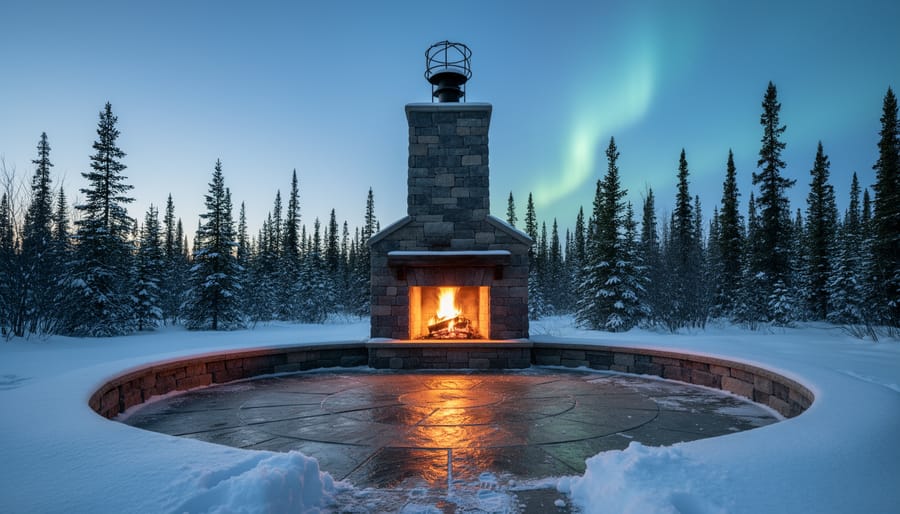
Install a properly fitted spark arrestor and chimney cap designed for temperatures down to -40°C, as standard models crack under our extreme cold. Your outdoor fireplace serves as a gathering spot during those magical winter evenings when the northern lights dance overhead, but only if it’s maintained properly for our harsh conditions.
Monitor for ice dams forming inside the chimney during our notorious temperature fluctuations, as moisture from combustion freezes and creates blockages that force smoke back into your garden space. This same attention to seasonal changes that makes cold-climate gardening successful applies to fireplace maintenance.
Use only seasoned hardwood dried for at least twelve months in Alberta’s low humidity, as wet wood produces excessive creosote and reduces heating efficiency when you need warmth most. Your outdoor fireplace can extend your garden enjoyment well into December, creating cozy spaces where frost-covered gardens become winter wonderlands.
The Unique Fire Safety Challenges of Alberta’s Zone 3 Climate
If you’ve ever stood beside your outdoor fireplace on a crisp January evening, watching the flames dance while your breath forms clouds in the minus-thirty air, you know there’s something magical about our Alberta winters. But those same Zone 3 winter conditions that make a cozy fire so appealing also create unique safety challenges that we simply can’t ignore.
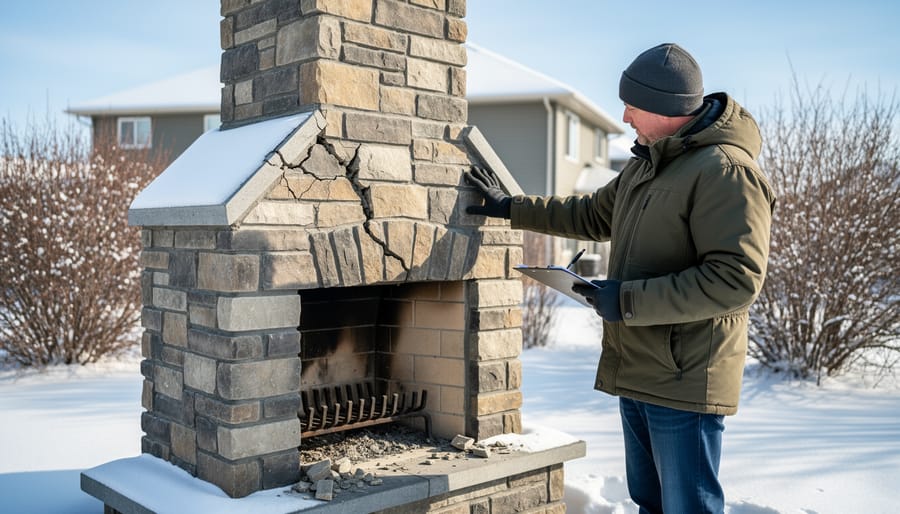
I learned this lesson the hard way during my third winter with our backyard fireplace. After a particularly brutal cold snap followed by a surprise chinook, I noticed concerning cracks running along the chimney’s exterior. What I didn’t realize then was that our dramatic temperature swings, sometimes shifting forty degrees in a single day, put extraordinary stress on fireplace materials. Those freeze-thaw cycles work like nature’s sledgehammer, forcing moisture into tiny cracks that then expands when it freezes, splitting mortar and creating structural weaknesses over time.
This is why inspecting your chimney after every major temperature swing isn’t just recommended, it’s essential for your family’s safety.
Snow accumulation presents another challenge we don’t often think about until it becomes a problem. That beautiful blanket of snow building up around your fireplace base can actually trap moisture against stone or brick, accelerating deterioration. I’ve started keeping the area around our fireplace cleared throughout winter, treating it much like I would a garden pathway.
Ice formation inside chimneys deserves special attention too. When warm smoke meets our frigid Alberta air, condensation freezes inside the flue, gradually narrowing the opening and restricting airflow. This creates dangerous backdraft conditions and increases creosote buildup. My neighbor discovered this when smoke started billowing back into her garden instead of rising safely upward. Regular professional inspections have become our community’s shared wisdom, especially after experiencing how quickly our climate can turn a beloved gathering spot into a safety concern.
Choosing the Right Location in Your Garden
When I first installed an outdoor fireplace in my Edmonton garden, I thought I’d found the perfect spot—tucked beside my storage shed and sheltered from the wind. Big mistake! After consulting with local fire officials, I learned that placement is absolutely critical for both safety and enjoyment in our Zone 3 climate.
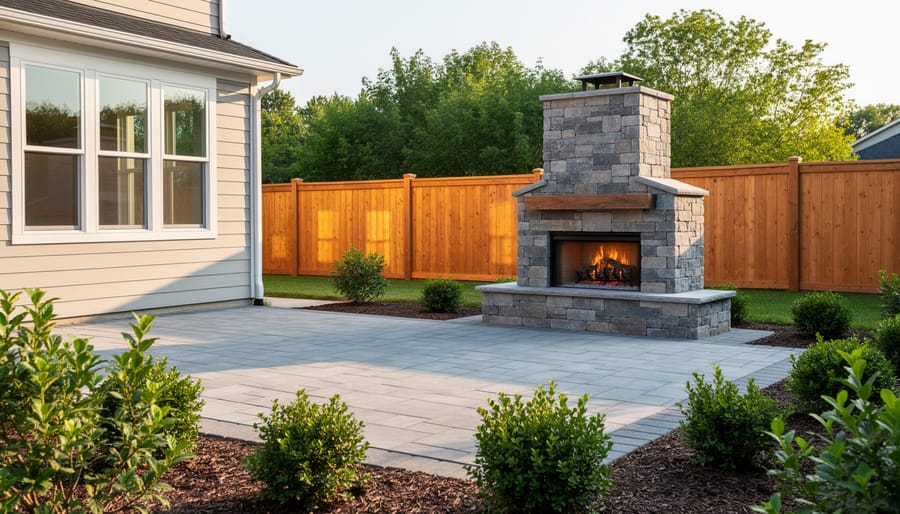
Just like planning your garden layout, choosing the right location for your outdoor fireplace requires careful thought about spacing and functionality. Standard fireplace clearance requirements typically mandate at least 10 feet from your home and other structures, but in Alberta’s unpredictable conditions, I’d recommend even more distance when possible.
Our notorious chinook winds can carry embers surprisingly far, especially during those warm winter spells when everything’s bone-dry. I’ve watched sparks travel 20 feet on a gusty evening, which really opened my eyes to the importance of generous clearance zones. Position your fireplace downwind from your house based on prevailing wind patterns—in most Alberta locations, this means considering our strong westerly winds.
Keep a minimum 15-foot radius clear of overhanging branches, and remember that our evergreens, while beautiful year-round, are particularly resinous and flammable. Wooden fences, garden sheds, and pergolas need substantial distance too. I learned to think of my fireplace area as a safety island—the more clearance, the better.
For those working with smaller garden spaces, consider using the fireplace as a central focal point rather than tucking it into a corner. This naturally creates clearance on all sides while making it a welcoming gathering spot. Stone or gravel surrounds provide additional fire-resistant buffering and look beautiful against winter snow too.
Chimney Maintenance Through Alberta’s Seasons
Spring Inspection After the Freeze
After our long Alberta winters, I always feel a mix of excitement and dread when it’s time to inspect our outdoor fireplace. Last spring, I discovered three hairline cracks in the firebox that definitely weren’t there before. That freeze-thaw cycle is no joke in Zone 3!
Start your inspection by examining the entire chimney structure from top to bottom. Look for any visible cracks, especially around the crown and cap where water typically collects. Pay close attention to the mortar joints between stones or bricks. If you can insert a butter knife more than half an inch into the mortar, it’s deteriorated beyond safe use and needs repointing.
Check inside the firebox for spalling, which looks like flaking or chipping on the brick surface. This happens when moisture gets trapped and freezes, causing the material to break apart from the inside out. Run your hand along interior surfaces (carefully!) to feel for loose pieces.
Don’t forget the foundation. Alberta’s ground movement during freeze-thaw can cause settling or shifting. Look for gaps between the fireplace base and surrounding stone or concrete. My neighbor ignored a small tilt one spring, and by summer, her entire structure had shifted noticeably.
Document any issues with photos and measurements to track whether problems worsen over time.
Fall Preparation Before the First Snow
I learned this lesson the hard way during my first Alberta winter with an outdoor fireplace. I waited until after the first snow to do my chimney prep, and let me tell you, scraping creosote in minus-fifteen weather isn’t something I’d recommend to my worst enemy!
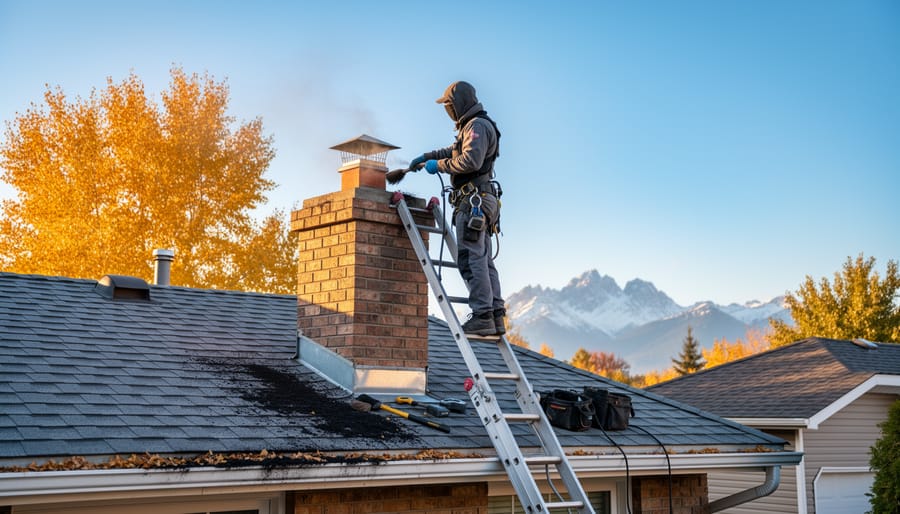
Here’s what I do now, and it’s saved me countless headaches. About two weeks before we typically see our first snowfall (usually late October in our Zone 3 gardens), I set aside an afternoon for chimney maintenance. First, I thoroughly inspect and clean the chimney using a proper chimney brush. Creosote buildup is sneaky in outdoor fireplaces because we tend to burn slower, cooler fires when we’re sitting outside enjoying the crisp fall evenings. That slower burn creates more creosote, which becomes a fire hazard if left unchecked.
Next, I check my chimney cap. If you don’t have one yet, install it before winter hits. A good cap keeps snow, rain, and curious critters out while still allowing smoke to escape properly. I also make sure the spark arrestor screen is intact and not clogged.
Finally, I do one last sweep for any debris, bird nests, or leaves that might have accumulated during summer. Trust me, starting your winter fire season with a clean, well-maintained chimney makes all the difference in both safety and enjoyment.
Winter Monitoring
Here in Zone 3, winter is when your outdoor fireplace truly earns its keep, creating those magical garden moments we treasure during our long cold season. But regular monitoring becomes absolutely essential once the snow flies.
I learned this lesson the hard way during my second winter with our garden fireplace. After a heavy snowfall followed by freezing rain, I didn’t check the chimney cap before lighting our New Year’s Eve fire. The ice buildup had partially blocked the flue, causing smoke to billow back into our seating area. Now I make it part of my weekly routine, and I encourage you to do the same.
Before each use, grab your ladder and inspect the chimney cap for snow and ice accumulation. A stiff brush works wonders for clearing light snow, but for ice, patience is key. Never chip away aggressively, as you could damage the cap or flashing. Instead, pour warm water over icy areas, or better yet, wait for a chinook to melt it naturally if you have time.
Keep the area around your fireplace clear of snow drifts too. You need safe access and good ventilation. Check mortar joints monthly for any cracking from freeze-thaw cycles, and always ensure your spark screen is secure before lighting up.
Safe Operation Practices for Cold-Climate Fires
I’ll never forget the first winter I decided to use my outdoor fireplace during a particularly brutal Alberta cold snap. The temperature had plummeted to minus 25, and I thought a cozy fire would be perfect while I enjoyed the snow-covered garden. What I didn’t realize was just how differently fires behave when the mercury drops that low.
Building a fire in Zone 3 temperatures requires a bit more attention than your typical summer evening burn. The cold air creates stronger drafts, which means your fire can roar to life faster than expected. I’ve learned to start small, using dry kindling and building gradually. Speaking of wood selection, this is absolutely critical: never burn those leftover scraps from your garden projects if they’ve been treated, stained, or painted. Those innocent-looking fence boards or deck planks release toxic fumes when burned, and treated materials are unsafe for any fire where people gather. Stick with seasoned hardwood that’s been properly dried and stored.
Cold weather also means you’ll need to manage your airflow carefully. The temperature difference between the frigid outside air and your fire creates intense updrafts. I keep my damper adjusted to prevent the fire from burning too aggressively, which wastes wood and creates safety hazards from flying embers.
Here’s my most important piece of advice, learned from a close call: never, ever leave a cold-weather fire unattended. In our climate, wind can pick up suddenly, and snow can shift off nearby structures onto your fire area. I always keep a shovel and bucket of sand nearby, even though water-based extinguishing becomes tricky below freezing. The sand works beautifully for smothering flames when it’s time to call it a night.
When you’re ready to extinguish, give yourself extra time. Those embers stay hot much longer in the cold, creating a false sense of security under a layer of ash.
Materials Matter: What Holds Up to Alberta Winters
I’ll be honest with you – I learned about material selection the hard way. My first outdoor fireplace featured a gorgeous manufactured stone veneer that looked absolutely stunning in the garden center. Two winters later, chunks were popping off like someone was taking a hammer to it. That freeze-thaw cycle we experience here in Zone 3 is absolutely brutal on materials, and not everything holds up to the test.
Let me share what I’ve learned through trial, error, and conversations with fellow Alberta gardeners who’ve been through this journey.
Natural stone, particularly limestone and granite, has proven to be incredibly reliable in our climate. I rebuilt my fireplace using local Alberta stone five years ago, and it still looks as solid as the day we finished it. The key is that these dense materials handle moisture infiltration much better than softer alternatives. Yes, they’re more expensive upfront, but when you’re not replacing damaged sections every few years, the investment makes sense.
Traditional brick gets mixed reviews from my gardening community. Quality fire brick designed for high temperatures performs beautifully, but standard construction brick can crumble after repeated exposure to our temperature swings. If you’re going the brick route, make sure you’re using properly rated materials and excellent mortar – this isn’t the place to cut corners.
- Natural stone offers exceptional durability through freeze-thaw cycles when properly installed.
- Metal fireplace units heat quickly and require minimal maintenance in winter conditions.
- Quality fire brick withstands extreme temperature changes without cracking.
- Manufactured units often come with warranties specifically covering cold climate performance.
- Natural stone installation requires higher initial investment and skilled labor.
- Metal units can rust without proper protective coatings and regular maintenance.
- Standard construction brick deteriorates rapidly under Zone 3 conditions.
- Manufactured stone veneer frequently fails after just a few Alberta winters.
Metal options deserve consideration too. My neighbor installed a heavy-gauge steel fireplace three years ago, and it’s holding up remarkably well. The trick is ensuring you get quality powder-coating and keep up with annual rust prevention. Metal doesn’t have the freeze-thaw vulnerability that masonry does, which gives it a real advantage in our climate.
Common Safety Mistakes Alberta Gardeners Make
We’ve all been there – learning the hard way when it comes to outdoor fire safety. Last spring, my neighbor Linda shared a story that still makes us both cringe. She’d been so excited about her new garden fireplace that she stacked her freshly emptied potting soil bags against the side wall “just for a minute” while tidying up. A stray ember found its way out the top, and those bags went up faster than you’d believe. Thankfully, she caught it quickly, but it was a wake-up call for our whole street.
Another classic mistake I see around our Alberta communities happens during those beautiful but breezy spring evenings. We get so eager to enjoy our outdoor spaces after the long winter that we fire up the chimney when winds are gusting at 30 kilometers per hour or more. I’ve watched ash and embers dance across yards like fireflies – magical to look at, terrifying when you think about where they might land. Your carefully mulched perennial beds become kindling in those conditions.
Then there’s the “it’ll be fine” approach to clearance zones. Tom down the road learned this lesson when his prized climbing roses got singed because he’d planted them too close to his fireplace, thinking the trellis would keep them at a safe distance. The radiant heat had other plans.
The good news? We’re all learning together, and sharing these experiences helps everyone garden more safely. Nobody’s perfect, and every near-miss is a chance to adjust our habits and protect the gardens we work so hard to create.
Protecting Your Garden While Enjoying Your Fire
I’ll never forget the spring I discovered my prized delphiniums had become crispy casualties of cozy February fires. The radiant heat from our outdoor fireplace, while wonderful for us, had been far less kind to my garden beds. If you’re enjoying fires in your Zone 3 Alberta garden, here’s what I’ve learned about keeping both the flames and your plants happy.
Start by creating buffer zones around your fireplace using hardscaping materials. I installed a generous patio of flagstone extending at least eight feet from our fireplace in all directions. This not only provides a safe gathering space but protects nearby cold-hardy perennials from radiant heat damage. Consider gravel pathways or river rock borders as additional barriers between fire and foliage.
When positioning plants, remember that heat rises and radiates outward. Keep your shrubs and perennials at least ten feet away, especially on the prevailing wind side. I’ve found that evergreens are particularly vulnerable to drying out from heat exposure during our already harsh winters.
Now, let’s talk about ash, which can be either friend or foe to your garden. Wood ash from untreated hardwoods makes excellent garden soil amendments, adding potassium and raising pH levels. However, only use completely cooled ash, and never apply it near acid-loving plants. I store mine in a metal container for at least a week before spreading it sparingly in spring. Avoid ash from treated wood, painted materials, or anything with chemical additives, as these can harm your soil and plants.
There’s something truly magical about gathering around an outdoor fireplace on a crisp Alberta evening, watching the northern lights dance overhead while your garden sleeps beneath its winter blanket. I’ve found that some of my most cherished moments happen in those cozy outdoor spaces, and I know many of you feel the same way. The key to enjoying these experiences year after year is making safety second nature.
When you take the time to properly maintain your chimney, choose the right materials for our Zone 3 conditions, and follow seasonal safety protocols, you’re not just protecting your property—you’re investing in countless future evenings of warmth and connection. I’d love to hear about your outdoor fireplace experiences. What safety practices have become part of your routine? Have you discovered any clever solutions for our challenging climate?
Remember, being prepared doesn’t mean being worried. It means you can relax fully, knowing your outdoor space is as safe as it is beautiful. Whether you’re roasting marshmallows with grandkids or simply enjoying the quiet crackle of burning wood after a long day in the garden, those moments are worth protecting. Here’s to many more cozy evenings under Alberta’s big sky, safely gathered around the warmth of your outdoor fireplace.