
How to Grow Strawberries in Colorado: Variety Selection, Planting, and Cold-Climate Care
Growing strawberries in Colorado is absolutely possible, and with the right variety selection and frost protection, you can harvest sweet, juicy berries from June through early fall despite our high-altitude challenges. The key is choosing day-neutral or everbearing varieties like Albion, Seascape, or Fort Laramie that tolerate our alkaline soil, dramatic temperature swings, and intense UV exposure at elevations above 5,000 feet.
I’ll admit, my first attempt at strawberries in a high-altitude garden was humbling. I planted June-bearing varieties straight from a big-box store, watched them bloom beautifully in May, and then lost nearly every blossom to a surprise frost in early June. Sound familiar? If you’ve gardened anywhere in Zone 3 or 4, you know that our short growing season (typically 120 to 150 days) demands strategy, not wishful thinking.
The good news is that strawberries are surprisingly forgiving once you understand what they need. Colorado’s low humidity actually reduces disease pressure compared to humid climates, and our intense sunlight produces berries with exceptional flavor. But you’ll need to amend that alkaline soil, provide consistent moisture in our dry air, and keep row covers handy for those unpredictable cold snaps that can strike well into June.
Whether you’re gardening in Denver’s urban plots, the Western Slope’s orchard country, or the high mountain valleys, this guide walks you through every step: from soil preparation and planting techniques to winterizing your patch for survival at 7,000 feet. Let’s grow strawberries that actually make it to your kitchen.
Understanding Colorado’s Strawberry-Growing Climate
Colorado’s climate presents unique challenges for strawberry growers, but understanding these conditions is the first step toward success. Most of Colorado sits in USDA hardiness zones 3 through 5, though elevation creates significant variation even within short distances. If you’re gardening at 5,000 feet or higher, you’re dealing with a compressed growing season that typically runs from late May through September, sometimes even shorter at higher elevations.
The biggest hurdle is temperature volatility. Colorado springs are notoriously unpredictable, with warm sunny days followed by sudden freezes well into June. I learned this the hard way my first year when a late May frost wiped out my strawberry blossoms just days after they appeared. Those temperature swings can drop 40 degrees in a few hours, catching plants off guard. Combine that with intense UV radiation at altitude, drying winds, and low humidity, and you’ve got conditions that stress plants in ways gardeners at lower elevations never experience.
What’s fascinating is how similar these challenges are to what Alberta gardeners face in Zone 3. Both regions contend with late frosts, short summers, and the need to maximize every growing day. The strategies that work in Calgary or Edmonton often translate perfectly to Colorado’s Front Range or mountain communities. This shared experience creates a community of cold-climate growers who swap tips on variety selection, frost protection, and season extension. We’re all figuring out how to coax sweet berries from challenging conditions, which makes the success that much sweeter.
Choosing the Right Strawberry Varieties for Colorado
Selecting strawberry varieties that can handle Colorado’s extreme temperature swings and short growing season makes the difference between a thriving patch and constant disappointment. You need plants bred to survive late spring frosts, produce reliably in cool nights, and tolerate the intense sun at high elevations.
June-Bearing Varieties for Maximum Harvest
June-bearing strawberries concentrate their crop into a three-week window in early summer, delivering abundant harvests perfect for preserving. Honeoye stands out as the workhorse variety for Colorado gardeners, producing large, flavorful berries and showing excellent cold hardiness through Zone 3. It resists leaf diseases that plague humid climates and handles Colorado’s dry air without issue.
Earliglow ripens about a week before Honeoye, giving you an extended harvest when you plant both. The berries stay smaller but pack intense flavor, and the plants rarely succumb to verticillium wilt or red stele, two diseases that can devastate a patch. Jewel, a later-season variety, rounds out the June-bearing options with firm berries that ship well and plants that shrug off spring freezes.
Day-Neutral Varieties for Continuous Production
Day-neutral strawberries ignore day length and produce steadily from June until hard frost, though heat above 85°F slows them down. Seascape thrives in Colorado’s cool mountain nights, setting berries continuously and delivering excellent flavor. The plants show remarkable tolerance to temperature fluctuations, a critical trait when your May mornings hover near freezing and afternoons hit 70°F.
Albion produces slightly larger berries than Seascape with a longer shelf life, making it ideal if you can’t pick daily. Both varieties establish strong root systems that overwinter successfully with proper mulching, giving you productive plants for three to four years.
Everbearing Options
True everbearing varieties like Fort Laramie were specifically bred for Rocky Mountain conditions. This heritage variety produces two distinct crops, one in June and another in September, handling Colorado’s alkaline soils better than most modern hybrids. The berries stay smaller, but Fort Laramie’s legendary hardiness has earned it a permanent spot in high-altitude gardens across the state.
Choose at least two varieties with staggered ripening times to spread your harvest and hedge against late frosts damaging a single crop.
Tools and Materials You’ll Need
Getting your strawberry patch started right begins with gathering the right supplies. Over the years, I’ve learned that having everything on hand before you break ground saves headaches and wasted trips to the garden center, especially when Colorado’s weather throws a curveball.
Here’s what you’ll need to set up and maintain a thriving strawberry patch:
- Planting supplies: strawberry plants or bare-root crowns, garden trowel, measuring tape for spacing, garden hose with adjustable nozzle
- Soil amendments: compost or well-rotted manure (2-3 inches for topdressing), peat moss or coconut coir for improving clay soil, sulfur for lowering pH if soil tests above 6.5
- Protection materials: agricultural row covers or frost blankets rated to 28°F, landscape fabric or black plastic for weed suppression, wire hoops or stakes to support row covers
- Mulching materials: clean straw (not hay, which contains weed seeds), pine needles, or shredded leaves for moisture retention and winter protection
- Watering equipment: soaker hoses or drip irrigation tubing, timer for consistent watering schedules, rain gauge to track weekly moisture
- Ongoing care tools: hand weeder, pruning shears for removing runners, watering can for spot watering new transplants
One investment I can’t recommend enough is quality straw mulch. I used to grab whatever was cheapest, but after watching my plants struggle through a brutal winter, I switched to certified weed-free straw. The difference was remarkable. That 4-6 inch winter blanket kept my crowns alive through -20°F cold snaps and eliminated the spring weed explosion I’d battled for years. Buy more than you think you’ll need; it compresses significantly and you’ll want generous coverage when November arrives.
Site Selection and Soil Preparation
Choosing the right spot for your strawberry patch can make the difference between a handful of berries and baskets full of fruit. In Colorado’s varied landscape, your strawberries need at least six to eight hours of direct sunlight daily, more is even better at higher elevations where the growing season is compressed. Look for a location with excellent drainage, since strawberries absolutely hate wet feet. If water puddles on your site after a rain, you’re asking for root rot and disease problems.
Wind protection matters more than many Colorado gardeners realize. Our state’s relentless winds can shred blossoms, dry out plants, and make late-spring frosts even more damaging. A south-facing slope near a fence, building, or windbreak of shrubs gives your berries the shelter they crave while still providing full sun exposure. Avoid low-lying frost pockets where cold air settles on chilly spring nights.
Now let’s talk about Colorado soil, which can be a real challenge. Most of our native soil is alkaline with a pH between 7.5 and 8.5, while strawberries thrive in slightly acidic conditions.
Beyond pH, Colorado soil tends to be heavy clay or rocky, sometimes both. A fellow Alberta gardener shared with me how her friend in Denver transformed a patch of clay-packed, rock-studded ground by working in three inches of compost and aged manure over two seasons. The transformation was remarkable: fluffy, dark soil that held moisture without turning into cement.
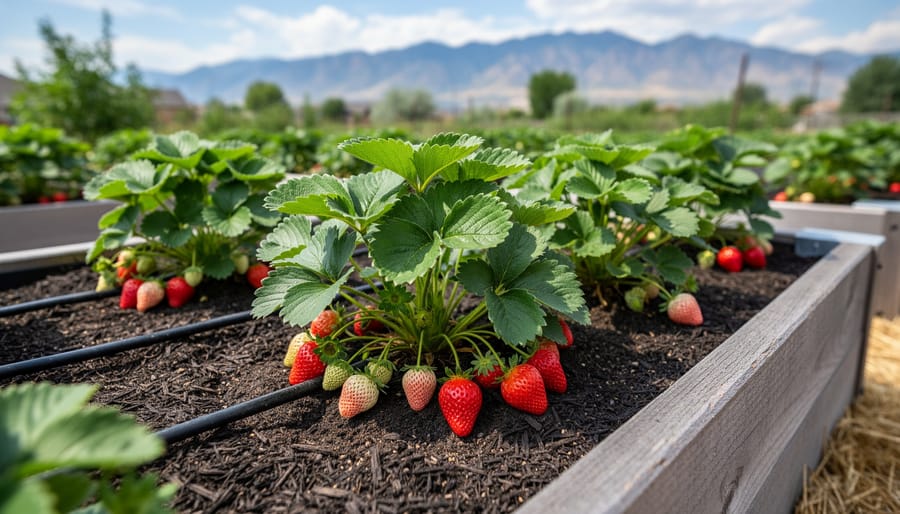
For most Colorado sites, you’ll want to dig in generous amounts of organic matter. Work compost, well-rotted manure, or peat moss into the top eight to ten inches of soil. This improves drainage in clay soils while boosting water retention in sandy spots. If your soil is truly problematic, heavily compacted clay, extremely rocky, or impossible to amend adequately, raised beds are your friend. Build them ten to twelve inches high, fill with a mixture of quality topsoil, compost, and peat moss, and you’ve created the perfect strawberry home regardless of what’s underneath.
Step-by-Step Planting Process
When to Plant in Colorado
Colorado’s planting window shifts dramatically by zone and elevation, so timing matters more here than in milder climates. In the lower-elevation areas around Denver and Fort Collins (zones 5a-5b), you can typically plant after last frost in mid to late May. Higher elevations and colder zones (3b-4b) push that date into early or even mid-June.
Don’t rush it. Even if the calendar says it’s safe, wait until the soil is truly workable, not just thawed on top but dry enough that it doesn’t clump into sticky mud when you squeeze a handful. Cold, waterlogged soil invites root rot and stunts growth. I learned this the hard way one April when I planted too eagerly and watched my crowns sit there, sulking, for three weeks.
Check your local last frost date, then add a week for insurance. Colorado’s weather loves to surprise us with a late-May snowstorm. If your bare-root plants arrive before conditions are right, keep them in the fridge wrapped in damp paper towels, they’ll wait patiently for a proper welcome.
Planting Technique
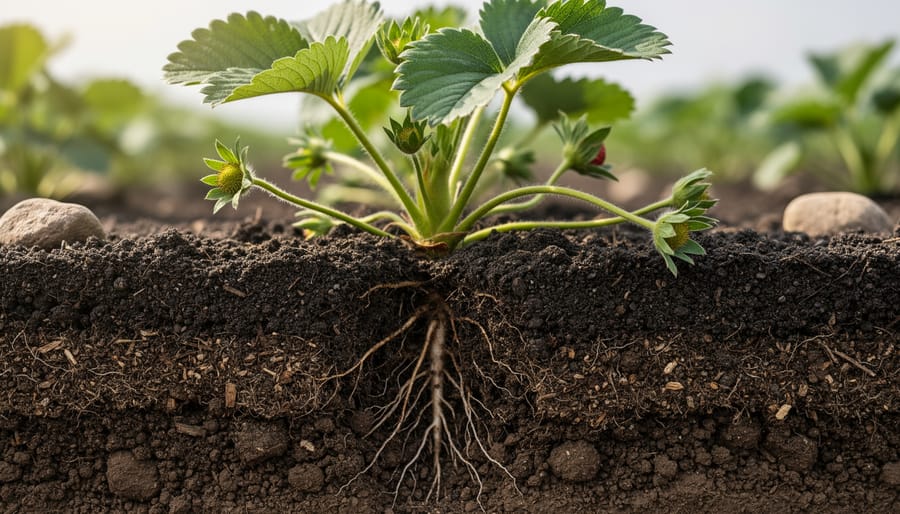
The secret to successful strawberry planting in Colorado comes down to getting the crown placement just right. The crown, that thick, central part where the leaves emerge, needs to sit exactly at soil level. If you bury it, you’re inviting crown rot in our heavy spring rains. Plant it too high, and Colorado’s relentless sun and dry air will desiccate the roots before they can establish.
Space your plants 12 to 18 inches apart in rows, with 3 to 4 feet between rows. I learned this spacing the hard way my first season, cramming plants at 8 inches and watching them compete for moisture in our arid climate. The wider spacing isn’t just about air circulation, it gives each plant enough soil volume to capture and hold precious water between irrigations.
When you set each plant, create a small mound in your prepared bed. Spread the roots over the mound like an umbrella, then backfill with soil, firming gently as you go. The crown should end up level with the surrounding soil surface. Water immediately after planting to settle the soil and eliminate air pockets around the roots.
Here’s where Colorado growers need to diverge from standard advice: mulch right away. Don’t wait. Apply 2 to 3 inches of straw or shredded leaves around each plant, keeping the mulch pulled back slightly from the crown itself. This initial mulch layer is insurance against our low humidity and high evaporation rates, which can pull moisture from the soil faster than new roots can replace it. I’ve watched newly planted strawberries wilt in a single afternoon when left unmulched in June.
Watering and Mulching in Colorado’s Dry Climate
Colorado’s dry climate and high evaporation rates mean strawberries need consistent moisture to produce sweet, plump berries. These thirsty plants require about 1 to 2 inches weekly but our arid conditions can quickly deplete soil moisture, especially during hot summer stretches when humidity hovers in the teens.
I switched to drip irrigation a few years back, and it transformed my strawberry patch. Instead of overhead watering that wastes half the moisture to evaporation before it reaches the soil, drip lines deliver water directly to the root zone. My water bill dropped noticeably, and the berries actually got bigger and sweeter because the plants received steady hydration without the feast-or-famine cycles that stressed them before.
Position drip lines or soaker hoses along each row, keeping emitters about six inches from plant crowns to encourage roots to spread. Water early morning to minimize evaporation loss and give foliage time to dry, reducing disease risk. Stick your finger two inches into the soil, if it feels dry at that depth, it’s time to water.
Mulching does double duty in our climate. A three-inch layer of straw or shredded leaves locks moisture into the soil while keeping roots cool during blazing afternoons when temperatures swing thirty degrees in a few hours. I spread fresh straw around my plants in early June, right after they finish blooming, and it cuts my watering frequency nearly in half. The mulch also suppresses weeds that would compete for our limited water and creates a clean barrier between ripening berries and soil, keeping them pristine even after afternoon thunderstorms.
Protecting Strawberries from Late Frosts and Temperature Swings
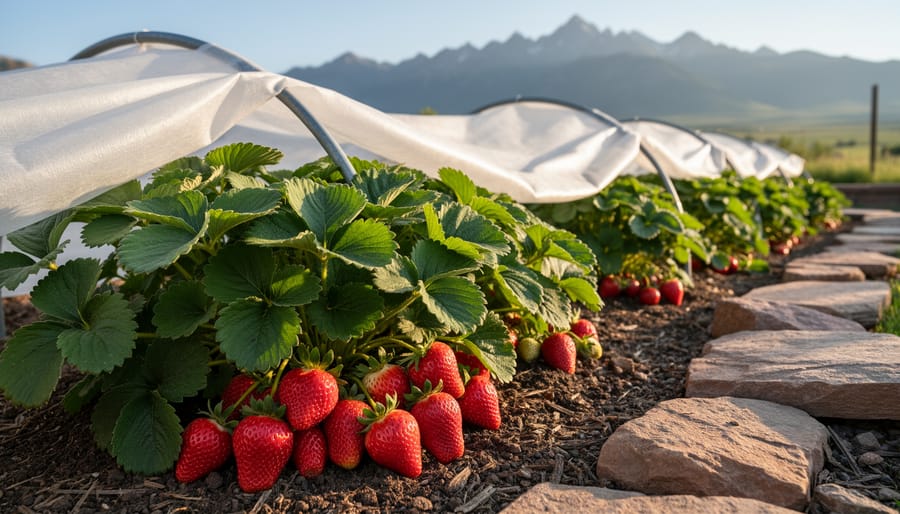
Colorado’s late frosts can strike well into June, especially at higher elevations, threatening strawberry blossoms just when you think it’s safe. I learned this the hard way my second spring in the mountains, waking to find delicate white flowers blackened by an unexpected freeze on June 2nd. Now I keep frost protection materials within arm’s reach through early summer.
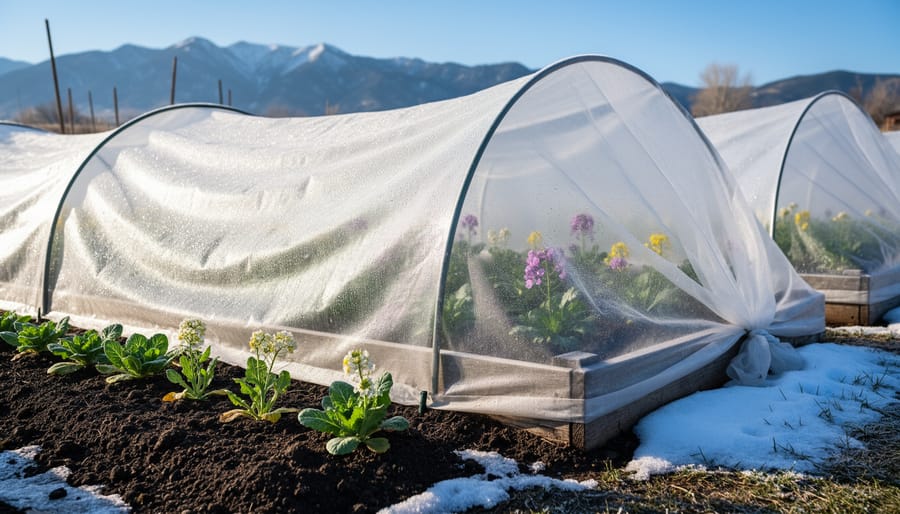
Monitor nighttime temperatures religiously from April through mid-June. When forecasts predict temps dropping to 32°F or below, cover your plants before sunset. Row covers and frost blankets work by trapping radiant heat from the soil, creating a microclimate several degrees warmer than the surrounding air. Lightweight floating row covers provide 2-4 degrees of protection, while heavier frost blankets can protect down to 24°F.
Your frost protection toolkit should include:
- Floating row covers (0.5-1.5 oz weight) secured with landscape staples or weighted edges
- Frost blankets or old bedsheets for sudden cold snaps (remove by mid-morning to prevent overheating)
- Cloches or overturned buckets for individual plant protection in small patches
- Emergency watering equipment to wet soil before freezing temps arrive
Wet soil holds heat better than dry soil, so thorough watering the afternoon before a predicted frost gives your plants an extra buffer. The moisture releases heat slowly through the night, raising the immediate temperature around plant crowns and blossoms by a degree or two.
Temperature swings of 40-50 degrees between day and night are common in Colorado spring. These fluctuations stress plants even without freezing. Maintain consistent mulch coverage to moderate soil temperature and reduce shock to root systems. A Colorado gardener in Fort Collins keeps reusable frost blankets folded next to her strawberry bed from April through the third week of June, grabbing them whenever the forecast looks dicey. That habit has saved countless blooms over the years.
Ongoing Care Through the Growing Season
Once your strawberries are established, consistent care through Colorado’s growing season keeps plants productive and healthy. The maintenance routine isn’t complicated, but our high-altitude conditions demand attention to a few specific details.
Fertilizing Your Colorado Strawberries
Start fertilizing about a month after planting, once plants show active new growth. Use a balanced fertilizer (10-10-10) or one slightly higher in phosphorus to encourage fruiting rather than excessive leaf growth. Apply every 3-4 weeks through July, then stop, late-season nitrogen pushes tender growth that won’t harden off before winter. In Colorado’s alkaline soil, I’ve found that organic options like fish emulsion or compost tea work beautifully while gradually improving soil pH. Water thoroughly after each application to prevent root burn in our dry climate.
Managing Runners
June-bearing varieties send out runners prolifically after fruiting. For the first year, pinch off all runners so plants focus energy on developing strong root systems. In subsequent years, allow 3-4 runners per plant to fill in rows, then remove extras. Day-neutral varieties produce fewer runners, making them lower-maintenance. I learned this the hard way when my first patch became a tangled mess by mid-July.
Weed Control and Pest Monitoring
Hand-pull weeds weekly when they’re small, mulch helps but doesn’t eliminate them entirely. Watch for spider mites during hot, dry spells (they love Colorado’s low humidity) and aphids on new growth. Inspect leaves regularly for powdery mildew, which can appear despite our dry air, especially with overhead watering.
Health Verification Checklist
Healthy strawberry plants show deep green leaves without yellowing edges, steady new growth, and firm fruit. Wilting despite adequate water, brown leaf edges, or stunted growth signal problems requiring immediate attention, usually water stress, nutrient deficiency, or root issues in our challenging soils.
Winterizing Your Strawberry Patch
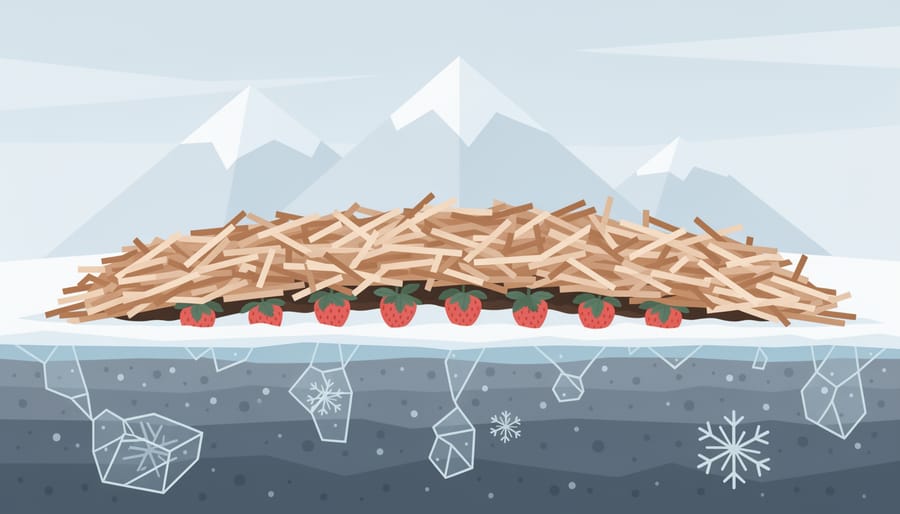
Colorado’s winters can be brutal on strawberry plants, but proper winterizing makes the difference between a thriving patch and dead crowns come spring. I learned this the hard way my first year when I mulched too early, half my plants rotted from trapped moisture during a November warm spell.
Timing is everything. Wait until after your first hard freeze (typically late October to mid-November depending on your zone) when temperatures drop to 20°F or below and stay cold. The plants need to enter dormancy naturally. If you mulch while they’re still actively growing, you’ll trap moisture and invite crown rot.
Here’s the winterizing process that’s saved my patch year after year:
- Clean up the patch after the first hard freeze by removing dead leaves and any diseased foliage, but leave healthy crowns intact.
- Apply a 4-6 inch layer of clean straw (not hay, which contains weed seeds) over the entire planting area, covering the crowns completely.
- Add extra straw around the edges and in exposed areas where Colorado’s drying winds hit hardest, I’ve found these spots need closer to 6-8 inches.
- Check the mulch depth after heavy winds and replenish as needed through winter, especially in January and February when our winds peak.
- Remove most of the straw in early spring when new growth appears (usually late March to early April), leaving just a thin layer around plants for moisture retention and weed suppression.
This approach mirrors what Alberta growers do in Zone 3, and I’ve heard from several Colorado gardeners who’ve used these techniques successfully for over a decade. One Denver-area grower told me she hasn’t lost a plant to winter damage in eight years using this method. The key is that thick straw blanket, it insulates against temperature swings and protects crowns from desiccating winds that are just as deadly as the cold itself.
Troubleshooting Common Colorado Strawberry Problems
Healthy strawberry plants show vigorous, deep green foliage, steady new growth, and firm white roots when you gently tug a plant. If your berries are forming and the crowns look plump and centered in the soil, you’re on track. But Colorado’s conditions throw some curveballs even experienced gardeners don’t always see coming.
Alkaline soil is a huge culprit here. If leaves turn yellow between the veins while the veins stay green, you’re likely seeing iron chlorosis from pH above 7.5. I learned this the hard way when my first patch looked anemic despite regular watering. The fix is adding sulfur or iron chelate to lower pH gradually, and working in plenty of compost each season to buffer those alkaline swings. Test your soil annually in fall so you can adjust before spring planting.
Hail damage is heartbreaking but manageable. Shredded leaves and bruised fruit happen fast during a storm. Remove damaged berries immediately to prevent rot, and trim severely torn leaves to redirect energy. Plants usually bounce back within two to three weeks if the crowns survived. Some growers keep lightweight row covers handy during hail season as emergency protection.
Drought stress shows up as wilted leaves, small berries, and brown leaf edges. Colorado’s low humidity means strawberries dry out faster than in wetter climates. If you notice these signs, check your mulch depth and increase watering frequency rather than duration. Drip irrigation helps tremendously.
Sunscald appears as white or tan patches on berries, especially at high elevation where UV is intense. Adequate mulch shades developing fruit, or you can use shade cloth during peak afternoon sun in July.
Why are my strawberries small and hard?
Small berries usually signal insufficient water during fruit development or overcrowding from too many runners. Colorado’s dry air makes consistent moisture critical, so check that you’re providing 1-2 inches weekly and thin runners to maintain 12-18 inch spacing.
How do I deal with hail damage on strawberry plants?
Remove damaged fruit immediately to prevent disease, trim badly shredded leaves, and give plants extra water to support recovery. Most plants regrow healthy foliage within two to three weeks if crowns weren’t destroyed.
What’s causing yellowing leaves with green veins?
This is iron chlorosis from alkaline soil, extremely common in Colorado. Lower pH with sulfur amendments, apply iron chelate as a quick fix, and add compost regularly to improve nutrient availability.
Check your plants weekly for these warning signs. Catching problems early makes all the difference between a disappointing harvest and baskets full of sweet berries.
Growing strawberries in Colorado isn’t just possible, it’s incredibly rewarding when you choose cold-hardy varieties, prepare your soil properly, protect against those surprise late frosts, and stay consistent with watering. I’ve watched my own patch flourish despite our unpredictable springs and harsh winters, and I know dozens of Colorado gardeners who’ve cracked the code on producing sweet, abundant berries at altitude.
The key is respecting our climate’s quirks rather than fighting them. Those same challenges we face, short growing seasons, temperature swings, and winter extremes, are exactly what our friends in Alberta deal with too. We’re part of a growing community of Zone 3 and high-altitude growers who’ve proven that cold climates and delicious strawberries absolutely go together.
I’d love to hear how your Colorado strawberry patch performs this season. What varieties are thriving in your zone? Have you discovered any frost protection tricks that work particularly well at your elevation? Share your experiences in the comments below, your insights might be exactly what a fellow gardener needs to succeed. Together, we’re building a knowledge base that makes cold-climate strawberry growing easier for everyone.